
Remember that sweltering July afternoon? You’re dripping sweat while chasing your toddler away from the dog’s water bowl. Your oldest is screaming because the slide burned her legs. And you forgot the sunscreen—again. Summer backyards shouldn’t feel like a minefield of “no”s. Truth is, smart upgrades turn chaos into calm. No magic required. Just thoughtful tweaks that work with your family’s messy reality.
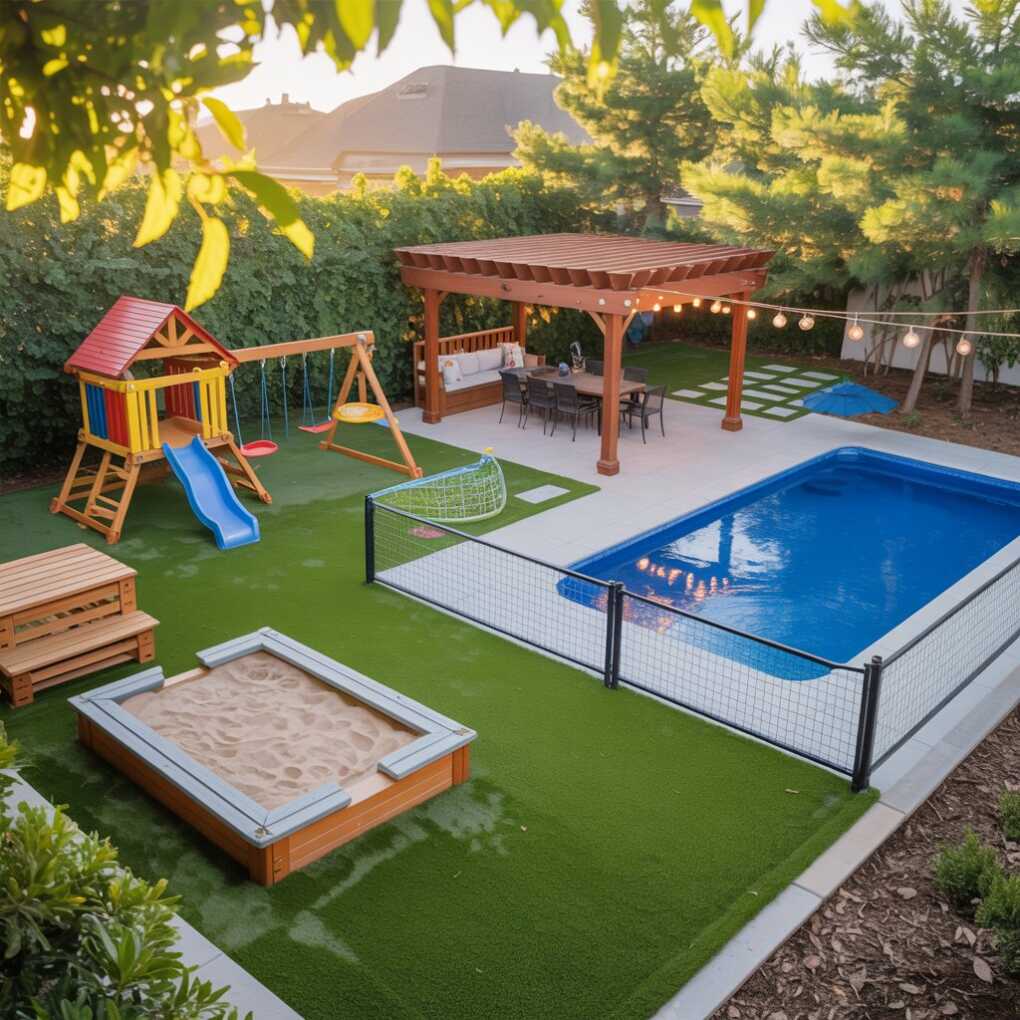
Map Your Family’s Daily Dance (Routine-Centric Zoning)
Most backyards get designed backwards. We pick cool features first—ooh, a fire pit!—then wonder why the space feels chaotic. Landscape designer Chris Lambton gets it right: “Design it so everyone will want to turn off the electronics and go outside to enjoy it.” Translation: Build zones matching your actual family rhythms. Not Pinterest-perfect. Yours.
Mornings mean breakfast chaos. Afternoons? Pure energy explosion. Evenings demand kid-wrangling while prepping dinner. Your yard needs zones as dynamic as your schedule. Float furniture 18-24 inches from seating areas. Creates flow. Lets you actually move when little hands need wiping. Avoid shoving everything against fences. Makes sightlines worse. Trust us. We’ve been there.
| Time of Day | Kid Activity Zone | Parent Zone |
|---|---|---|
| 7-9 AM | Sandbox near patio | Coffee station inside kitchen |
| 1-3 PM | Water play area (shaded) | Lawn chair with supervision sightlines |
| 5-7 PM | Calm-down hammock nook | Grill prep area with snack access |
Pro Tip: Tape temporary zone lines with painter’s tape. Test for a week. Adjust before permanent changes. Kids’ habits change faster than weather forecasts.
Beat the Heat Without Melting Into a Puddle (Smart Cooling Systems)
Hot playground equipment? Not just uncomfortable. Dangerous. Metal and plastic heat up fast. Can hit temperatures causing second-degree burns. Ouch. High heat triggers fatigue. Dehydration. Even heat stroke. Especially for kids who play hard without breaks. According to marygrove.com, shaded zones drop temps by up to 20∘F compared to direct sun exposure.
Forget hoping for clouds. Install solutions first. Retractable awnings deploy in seconds. Block sun instantly. Pair with outdoor misting systems. Evaporation drops air temps 10∘−15∘F fast. Layer trees and shrubs strategically. They’re nature’s A/C. But don’t plant too close to play zones. Creates hiding spots. Blocks your view. Plants like sunflowers? Great. But keep ’em away from the main play path.
# Quick Heat Safety Checklist
- [ ] Check slide/swing temps with back of hand before kids play
- [ ] Position play areas in morning shade (east side yards)
- [ ] Place fans in shaded spots only (sun blows mist away)
- [ ] Keep surfaces pre-cooled before peak heat hours (10AM-4PM)
Kids won’t self-regulate. They’ll play until collapse. We learned this hard way. Now our rule: No play during “oven hours.” Schedule splash time early morning. Save the fire pit for evenings. Heat exhaustion sneaks up. Better safe than sorry. Hydration stations help—but only if they’re in the play zones. Not by the back door where you’ll forget them.
Build the “Yes Zones” (Safety-First Play Areas)
“Where do they get all that energy!?” Every parent wonders this. Turns out, over 200,000 kids visit ERs yearly for playground injuries. Most preventable. Start with ground rules everyone helps create. Write them down. Post visibly. Include clear “yes zones” and “no zones.” Simple rules beat constant yelling. Like:
“Use slides feet first only. Swings get one rider at a time. No climbing on picnic tables.”
— Erie Insurance safety checklist
Swing sets need level ground. Set in concrete if possible. Padding underneath? Non-negotiable. Rubber mulch or wood chips absorb impact better than dirt. Check bolts monthly. Rust happens faster than you think. Trampolines? Cage enclosures mandatory. One jumper rule strictly enforced. Still risky—but safer.
Pro Tip: Paint only energy-absorbing zones bright colors. Green for grass play. Blue for splash zones. Kids learn boundaries visually. Works better than “don’t go there” lectures.
Safety Materials Comparison
| Surface Type | Injury Risk Reduction | Maintenance Level | Kid Comfort |
|---|---|---|---|
| Rubber Mulch | 87% | Low | High (soft) |
| Poured Rubber | 92% | Very Low | High |
| Wood Chips | 75% | Moderate | Medium |
| Grass | 30% | High | Medium |
Survey your yard weekly. Hunt for hazards like garden tools or thorny branches. Fire ant mounds happen. Holes appear overnight. Keep chemicals locked up. Always. Kids will explore. Make sure they find safe spots first.
Clear Lines of Sight = Peace of Mind (Visual Supervision Design)
Here’s the game-changer most miss: Layout for sightlines. Not aesthetics. Can you see the play zone from your coffee spot? If not—fix it. Period. No more “where’d the kids go?!” panic. Floating seating arrangements help. But sometimes you need intentional sight corridors.
Trim bushes strategically. Low hedges define zones without blocking views. Avoid tall planters near play areas. They create blind spots. Build decks with waist-high railings on the play side. Lets you stir dinner while watching splash time. Position hammocks and porch swings 12-18 inches above ground. Easy for kids to climb in/out. But high enough for you to see over when seated.
“Kids can’t always recognize dangerous situations—which is why adult supervision while playing outdoors is crucial.”
— SafeWise backyard safety guide
Don’t hide play structures behind trees or fences. Yes, it looks pretty. No, it’s safe. Supervision isn’t optional. Heat exhaustion or minor injuries need quick response. Can’t respond if you can’t see. We learned this when our youngest swallowed a bug. Took minutes to find her hiding behind the rose bushes. Not fun.
Pro Tip: Place your favorite chair first. Then build the play zone within clear view. Not the other way around.
Surfaces That Survive Sticky Fingers & Spilled Ice Cream (Low-Maintenance Materials)
Real talk: You don’t need more chores. Stone patios beat wooden decks. No repainting. No splinters. Sunbrella fabrics resist stains and weather. Pillows survive juice spills. Cushions? Durable but not precious. Let kids lounge freely.
Grass takes work. Choose climate-appropriate varieties. Fertilize once per season after initial planting. Then just mow and rake. Simple. But consider high-traffic zones. Paths between play areas get muddy fast. Interlocking pavers solve this. Weed barriers underneath keep maintenance low.
| Material | Stain Resistance | Heat Retention | Longevity |
|---|---|---|---|
| Concrete Pavers | High | Moderate | 20+ years |
| Natural Stone | Medium | Low | 30+ years |
| Composite Decking | High | High | 25 years |
| Rubber Tile | Very High | Low | 15 years |
Pro Tip: Mix materials for visual interest but group by function. Use pavers for walkways. Rubber tiles under play sets. Grass for open play. Transitions should feel natural—not jarring.
Perennial plants save time. They return yearly. Choose bee-minimizing varieties. Kids love them. No stings. Avoid plants with pointy edges. Scratch risks aren’t worth pretty flowers. Low beds work better than raised ones. Let kids crawl freely without bumping heads. Safety first. Always.
When You’re Ready for Water Fun: A Quick Note on Pools
Okay. We know pools are the ultimate summer upgrade. Everyone wants one. But pools need solid backyard fundamentals first. Get your safety zones right. Master heat management. Perfect supervision sightlines. Then consider water features.
Once basics are covered, pools transform summers. Slides and tanning ledges add play value. But safety gear is non-negotiable. Fence enclosures. Alarm systems. CPR training for all adults. Pool parties become legendary—but only when everyone’s safe.
Looking for professionals? Check the best pool companies near Ellicott City. They handle installation stresses so you can focus on summer fun. But really—don’t even think about pools until your backyard passes the safety checklist.
Honestly? Most families rush into pools without considering daily realities. Before calling installers:
- Check local fence height requirements (often 4-6 feet)
- Calculate chemical costs—adds $50+/month
- Map emergency exit paths from house to pool
- Verify CPR certification expires before installation
- Schedule toddler swim lessons now (waitlists are long)
Pools aren’t “done” after installation. They’re ongoing commitments. Better prepared families enjoy them more. No regrets.
Conclusion: Your Summer Starts Now
Summer’s too short for backyard stress. No need for perfection. Just progress. Start small. Pick one zone to upgrade this weekend. Maybe add misters to your seating area. Or clear sightlines to the play structure. Tiny steps create huge relief.
Remember: Backyards serve your family—not Instagram. Burn marks happen. Grass gets muddy. Ice cream spills. Build spaces that handle real life. Then step back. Breathe. Watch the kids play without screaming “no” every five seconds.
That peace? Worth every nail driven. Every seed planted. Summer’s calling. Your upgraded backyard awaits.