
Ever designed your dream bedroom only to realize the window behind bed is staring you down every morning? I’ve been there—waking up to harsh sunlight blasting my face like an unwelcome alarm clock. If you’re nodding along, you’re not alone. Many US homeowners and renters face this common layout challenge, especially in apartments with awkward room shapes where the only logical spot for your bed puts your head against the window.
This bedroom window placement dilemma creates real tension between design aspirations and sleep needs. On one hand, that window behind bed offers gorgeous natural light and potentially stunning views. On the other, it can sabotage your precious rest with glare, drafts, and privacy concerns. In this guide, we’ll explore the pros and cons of window behind bed, feng shui implications for sleep quality with window behind bed, and 10+ stylish fixes to transform this common headache into a design feature.
Whether you’re dealing with an east-facing bedroom window that wakes you at dawn or a drafty rental window behind headboard, you’ll discover practical solutions tailored to your lifestyle and budget. Let’s turn that problematic window behind bed into your secret weapon for better sleep and stunning design.
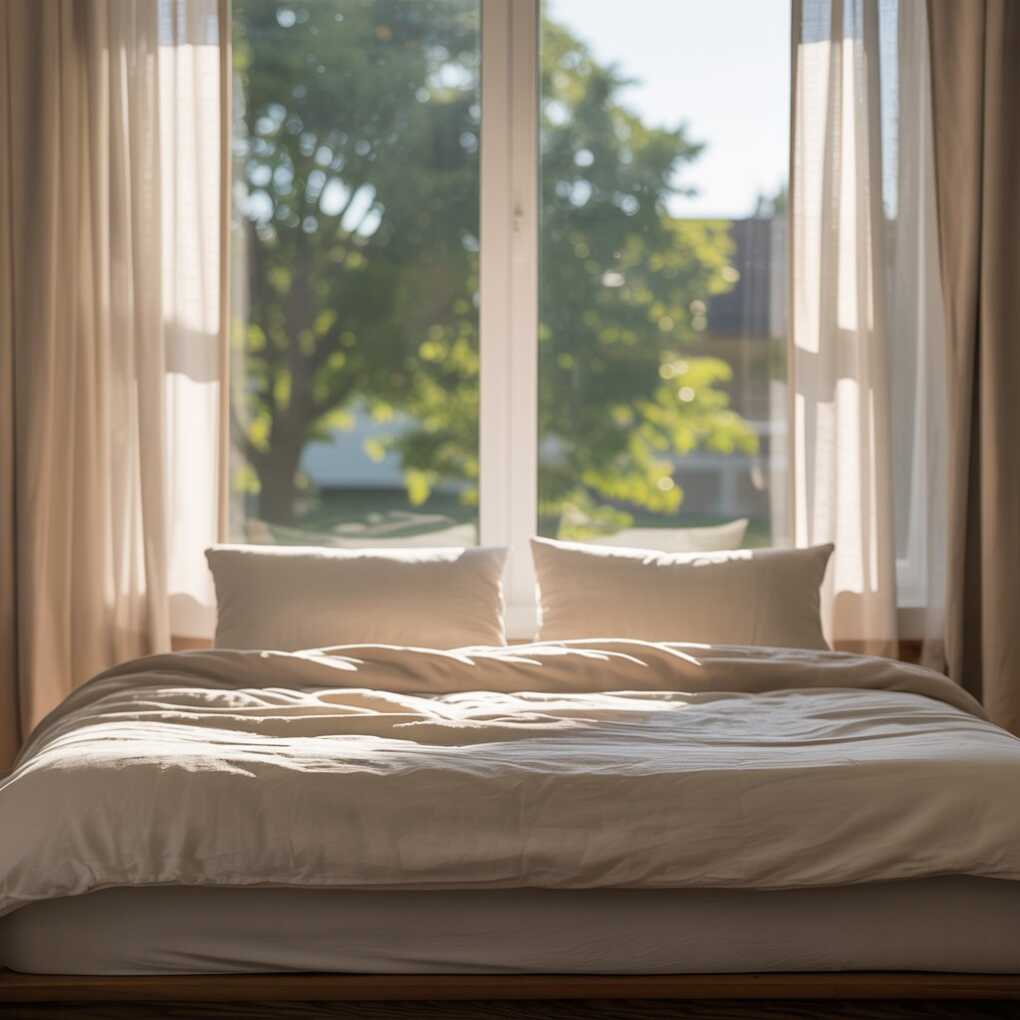
Pros and Cons of Window Behind Bed
The Upsides of Bedroom Window Placement Behind the Bed
When strategically handled, a window behind bed can be a bedroom’s secret weapon. Here’s why:
- Stunning views on waking: Imagine opening your eyes to treetops, cityscapes, or mountain vistas—nature’s most beautiful alarm clock
- Abundant natural light: Morning sunlight exposure boosts mood and regulates circadian rhythm (more on this in the next section)
- Space-saving layout: In smaller bedrooms, placing the bed against the window maximizes floor space for other furniture
- Romantic ambiance: East-facing bedroom windows create magical sunrise glow that sets a dreamy tone for the day
The Downsides and How They Affect Sleep
Unfortunately, that same window can become your sleep nemesis:
- Glare disrupting circadian rhythm: Morning light exposure before your body’s ready can delay melatonin production, making it harder to fall back asleep
- Drafty bedroom windows: Especially problematic in winter, causing uncomfortable temperature fluctuations that disrupt sleep cycles
- Privacy concerns: Street-level windows leave you feeling exposed, creating subconscious stress that affects sleep quality
- Feng shui bedroom window taboos: Traditional feng shui warns against headboards against windows, believing it creates “unstable energy” and poor sleep support
- Light pollution at night: Streetlights and neighbor’s lights can infiltrate your space, fragmenting sleep architecture
- Noise amplification: Windows transmit outside sounds more directly to your pillow, from traffic to barking dogs
| Pro | Con | Impact | Fix Preview |
|---|---|---|---|
| Beautiful morning views | Harsh glare waking you prematurely | Moderate to high | Blackout curtains, adjustable shades |
| Space-efficient layout | Drafts causing temperature fluctuations | Moderate | Thermal curtains, weather stripping |
| Abundant natural light | Privacy concerns with street-level windows | High | Layered window treatments |
| Romantic sunrise glow | Feng shui energy instability | Subjective | Symbolic headboard solutions |
| Potential for window seat | Light pollution disrupting sleep cycles | Moderate | Blackout solutions, smart glass |
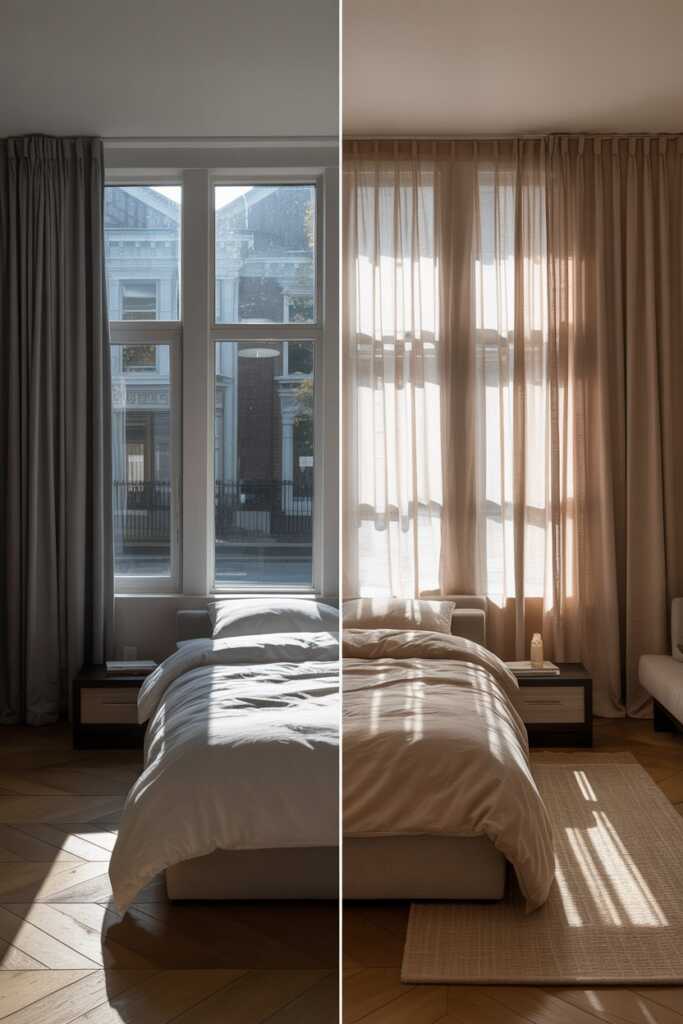
Feng Shui and Sleep Science: Is Window Behind Headboard a No-Go?
Let’s bridge ancient wisdom with modern science. Traditional feng shui strongly advises against placing your headboard against a window, claiming it creates “unstable energy” that prevents restful sleep. The philosophy suggests your head needs solid support—both physically and energetically—to feel secure during sleep.
Modern sleep science actually supports some of these concerns, though through a different lens. Research shows that morning light exposure significantly impacts melatonin levels—the hormone that regulates sleep-wake cycles. A 2024 BMC Public Health study found that every 30-minute increment of morning sun exposure before 10 a.m. was associated with a 23-minute reduction in sleep midpoint (the halfway point between sleep onset and wake time), effectively shifting your circadian rhythm earlier. This is great if you’re trying to wake up naturally, but problematic if that east-facing bedroom window wakes you before your body’s ready.
The PsyPost study further confirmed that morning sunlight exposure predicted better sleep quality that night—people who spent time outside in the morning reported falling asleep more quickly and experiencing fewer nighttime awakenings. However, when that light hits you while you’re still trying to sleep, it can delay melatonin production by up to 50%, according to research from the European Geriatric Medicine journal.
So what’s the verdict? If your window behind headboard faces east, you’re getting the most biologically potent light right when your body might still be producing melatonin. The solution isn’t necessarily moving your bed (though that helps if possible), but controlling that light exposure until your body’s ready for wakefulness.
Pro Tip: If you love waking with the sun but hate being jolted awake, try a gradual sunrise alarm clock that mimics natural dawn 30 minutes before your desired wake time—this works with your biology rather than against it.
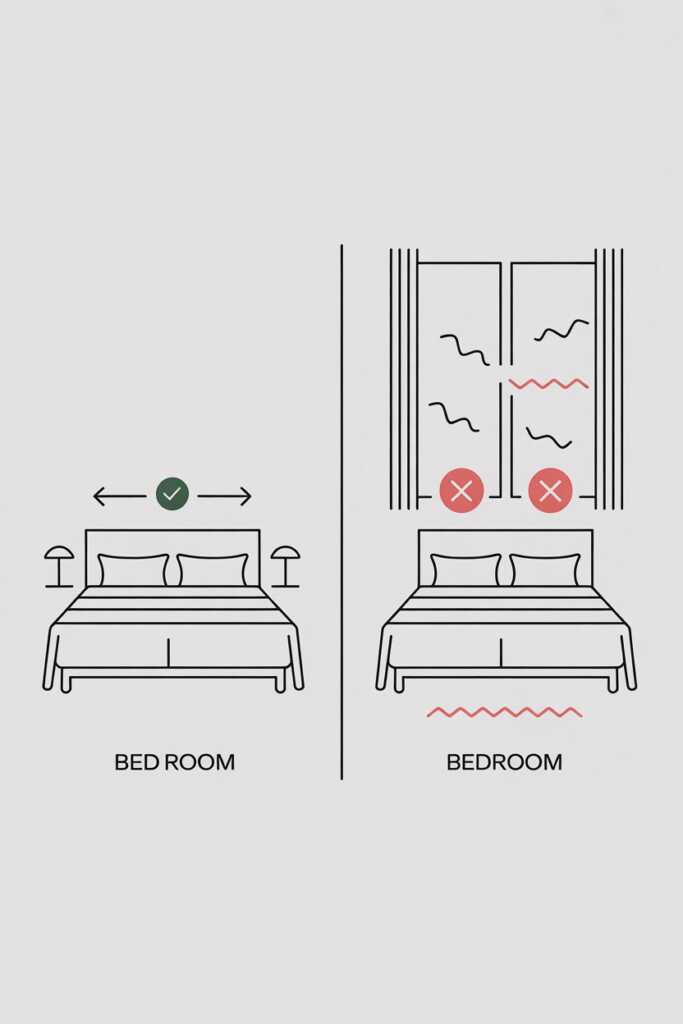
Stylish Solutions: Curtains and Window Treatments for Bedroom Windows
Best Curtains for Window Behind Bed
Your window treatments make or break the sleep quality with window behind bed. Here are six top solutions:
- Blackout curtains bedroom essential: My absolute top recommendation—look for triple-weave fabric that blocks 99% of light. The IKEA TUPLEN is a renter-friendly option with hidden tabs that don’t require drilling.
- Thermal curtains for winter drafts: Layer these underneath your decorative curtains to combat drafty bedroom windows. The Lush Decor Microfiber Thermal Blackout set adds insulation without sacrificing style.
- Sheer drapes for diffused light: Perfect for west-facing windows where you want soft evening light without harsh glare. Try the West Elm Linen Sheers for that airy, minimalist bedroom window decor.
- Motorized shades for renters: The Lutron Serena Smart Shades install with tension rods (no drilling!) and can be scheduled to open gradually at sunrise—ideal for circadian rhythm support.
- Roman shades with blackout lining: The Bali Perfect Privacy collection offers clean lines with customizable light control—great for modern industrial bedroom aesthetics.
- DIY curtain hacks: For a fraction of the cost, sew blackout lining into thrifted curtains using iron-on hem tape (more on this in the DIY section).
Headboard Against Window Solutions
When moving your bed isn’t an option, get creative with these headboard solutions:
- Floating shelf headboard: Mount a wide wooden shelf (at least 12″ deep) to create a visual barrier between your head and the window. Style with plants and books for a cozy, minimalist bedroom window decor.
- Padded headboard cover: Extend your existing headboard upward with a fabric-covered foam panel that reaches window height.
- Room divider as headboard: Position a folding screen (like the Wayfair Living Room Divider) behind your bed to block drafts while adding design interest.
- Window film for privacy: Apply frosted or decorative window film (removable for renters) to maintain light while solving privacy issues.
Budget vs. Splurge: For $50, try layered clip-on curtains with blackout lining. For $500+, invest in custom motorized shades with circadian lighting programming that adjusts throughout the day.
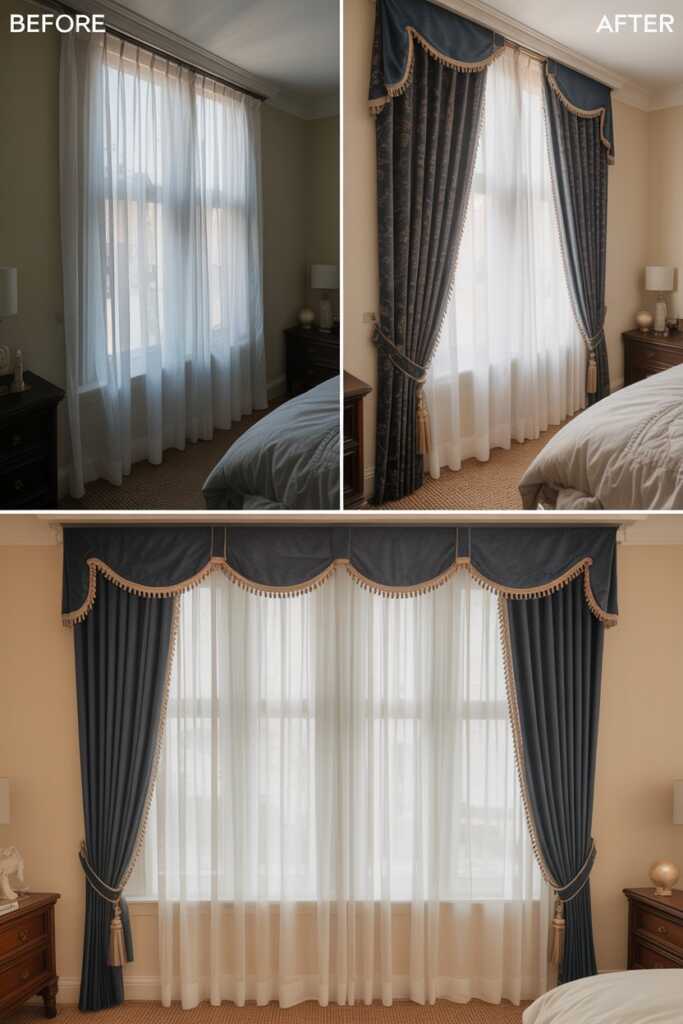
DIY Hacks and Bedroom Layout Fixes
Rental-Friendly DIY Window Treatments Bedroom
You don’t need to drill or spend big to transform your window behind bed situation. Try these budget-friendly projects:
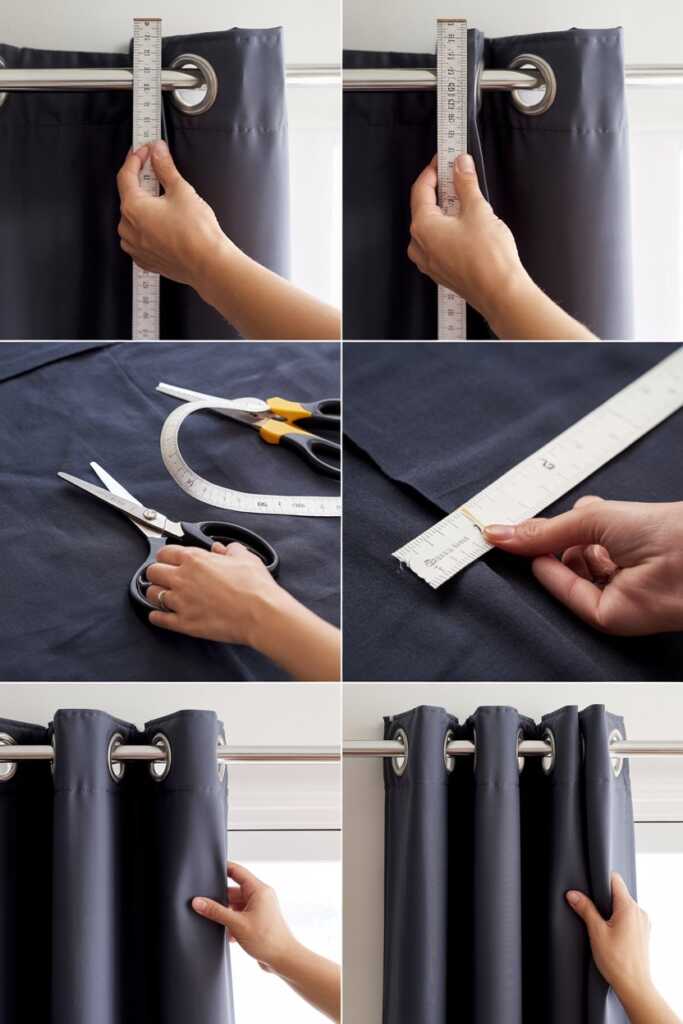
1. No-Sew Blackout Liner ($35 total)
Tools needed: Iron-on hem tape, blackout fabric (Joann Fabrics), scissors
Steps:
- Measure your existing curtain width + 6″ and height + 4″
- Cut blackout fabric to size
- Fold edges and apply iron-on hem tape
- Clip to back of existing curtains with curtain clips
Cost breakdown: Blackout fabric ($25), hem tape ($5), clips ($5)
2. Window Seat Behind Bed Build (IKEA Hack)
Transform that problematic space into a functional feature:
- Use two IKEA KALLAX units (sideways) as base
- Top with 1″ plywood cut to size
- Add foam cushion and upholstery fabric
- Style with throw pillows for reading nook
Pro tip: Store extra bedding in the KALLAX compartments
3. Acoustic Panels for Noisy Windows
Reduce outside noise with this simple hack:
- Purchase fabric-wrapped acoustic panels (Auralex)
- Mount with removable adhesive strips
- Arrange in geometric pattern behind bed
- Paint frames to match your headboard
Rearranging for Better Bedroom Layout with Rear Window
When possible, reposition your bed to optimize the space:
- L-shaped bed placement: Angle your bed so only the foot touches the window wall, creating a cozy nook while maintaining solid headboard support
- Diagonal placement: Position bed diagonally in the room to keep head away from window while maximizing views
- Window as focal point: If moving the bed isn’t feasible, enhance the window area with seating and decor to make it the room’s feature rather than a problem
Critical safety note: Never block emergency exits! Ensure at least one clear path to the door remains unobstructed.
Real-Life Examples and Trendy Designs
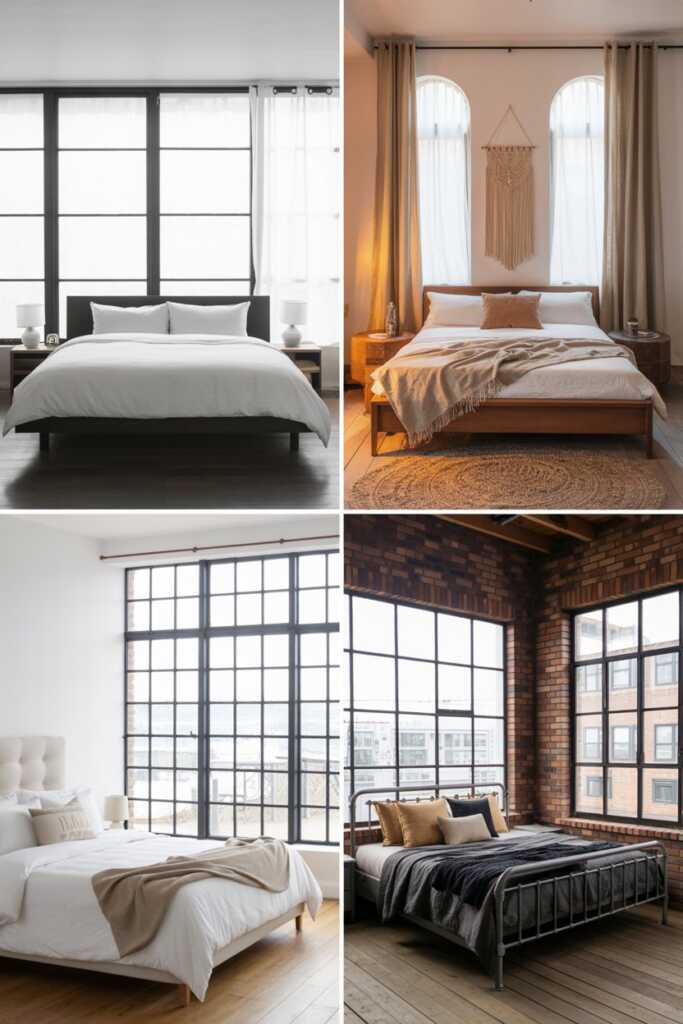
Let me share three real bedroom transformations that turned window behind bed challenges into design triumphs:
1. The Cozy Minimalist Makeover
Sarah, 32, converted her drafty apartment bedroom by installing floor-to-ceiling linen curtains with hidden blackout lining. She added a floating oak shelf as a “symbolic headboard” per feng shui principles. The result? A serene space where morning light filters gently through sheer underlayers, boosting her circadian rhythm without jolting her awake. Cost: $220 total.
2. The Boho Chic Solution
Marcus, 28, embraced his west-facing window behind bed with layered macramé hangings, sheer curtains, and a rattan room divider. The multiple textures diffuse harsh afternoon light while creating visual interest. His sleep quality with window behind bed improved dramatically after adding thermal lining to his outer curtains. Cost: $185 using mostly thrifted pieces.
3. The Modern Industrial Fix
For her loft apartment, Priya, 35, installed floor-to-ceiling industrial-style black pipe curtain rods with triple-layer treatments: blackout, thermal, and sheer. She positioned her bed diagonally to keep the head away from the window while maintaining the stunning city view. Cost: $450 (mostly for custom rods).
Looking ahead to 2026 trends, sustainable natural light bedroom design is evolving with smart glass technology that transitions from clear to opaque with the touch of a button—perfect for window behind bed scenarios where you want views during the day but privacy at night. Pinterest is already buzzing with #windowbehindbed solutions featuring these innovations.
Conclusion and Next Steps
That window behind bed doesn’t have to be your sleep enemy—it can become your design ally with the right approach. Whether you choose blackout curtains for window behind bed scenarios, creative headboard solutions, or strategic room rearranging, you now have the tools to transform this common challenge into a bedroom feature that supports both style and restful sleep.
Remember: Bedroom window placement matters most when it aligns with your personal sleep rhythms. If you’re a morning person, that east-facing bedroom window might be a gift; if you’re night owl, it needs careful management.
Your turn: Try one of these DIY hacks this weekend—start with the no-sew blackout liner if you’re a renter, or experiment with bed placement if you own your home. Which solution speaks to you most? Share your window behind bed journey with me on Instagram—I love seeing how readers transform their spaces!