
Basements have had a rough reputation for decades — dark, damp, full of things nobody wants to deal with. But that’s changing fast. More homeowners are realizing that the basement is some of the most underused square footage in the house, and with the right approach, it can become one of the best rooms in it. Whether you’re planning a full renovation or just want to refresh what’s already down there, these five ideas are driving the biggest transformations right now.
One thing worth saying upfront: none of these ideas work well — or last — if the basement has unresolved moisture issues. Trends look great in photos. Warped flooring, bubbling paint, and mold behind a feature wall don’t. Before you invest in any finish work, make sure the envelope is sound. The team at Aquatech Waterproofing in Mississauga offers free assessments to catch moisture problems before they become expensive mistakes buried under new drywall.
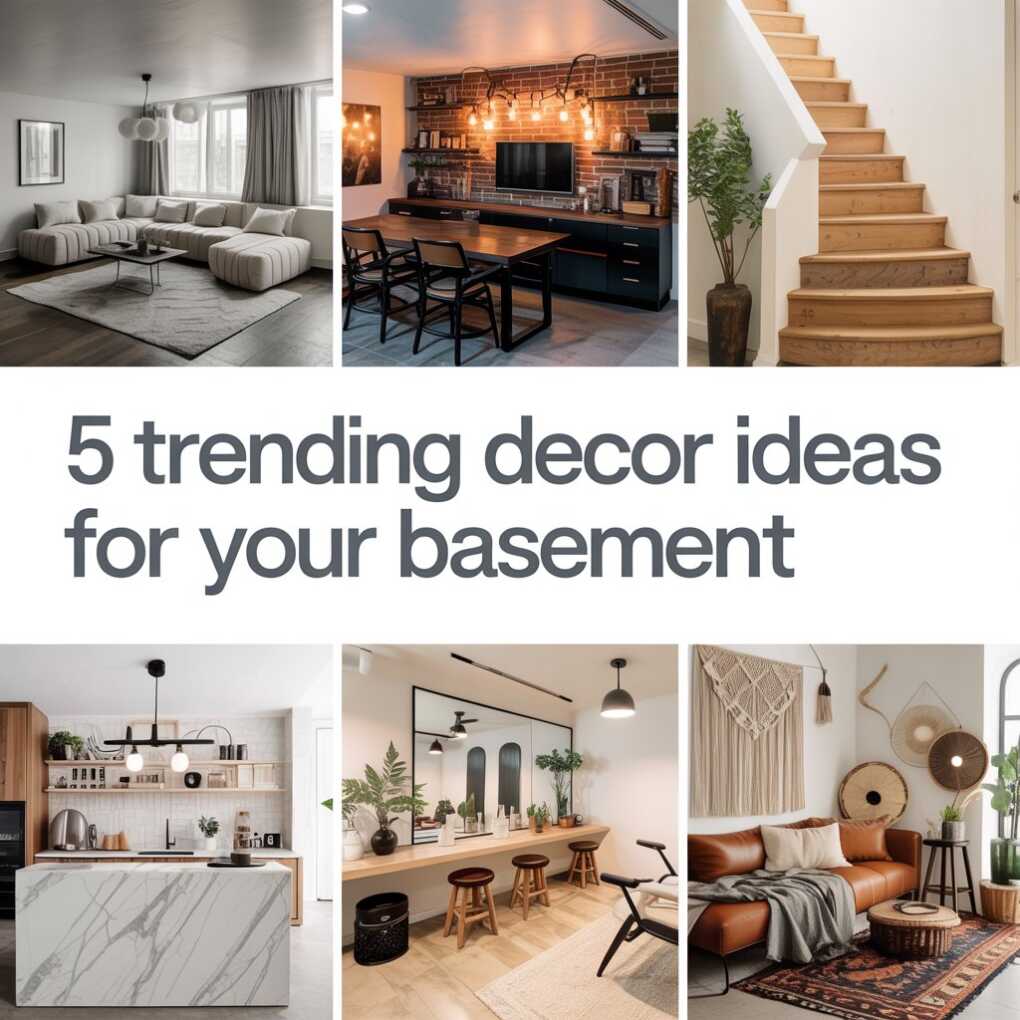
The ideas worth trying right now:
1 The warm industrial look
Exposed concrete, raw steel, reclaimed wood accents — the industrial aesthetic has moved well past loft apartments and into residential basements, and it works particularly well below grade. The reason is simple: basements already have the bones. Concrete walls and ceilings that would cost money to hide can become design features instead. The key is warmth. Industrial done cold feels like a car park. Industrial done warm — with amber lighting, wood shelving, leather or linen upholstery — feels intentional and genuinely inviting. Dark matte paint on exposed ductwork makes it look like a choice rather than an oversight.
2 Biophilic design below grade
Plants, natural textures, earthy tones, and materials that reference the outdoors — biophilic design has taken over above-grade living spaces and is now making its way into basement renovations. The challenge below grade is light, since most basement plants need more of it than small windows provide. The solution is a combination of full-spectrum grow lights integrated into the ceiling (which double as ambient lighting) and species chosen specifically for low-light conditions — pothos, snake plants, ZZ plants, and ferns all thrive without direct sun. Layer in natural stone tile, linen textiles, and wood-grain LVP flooring and the result feels like a grounded, calm retreat rather than an afterthought.
3 The multi-zone layout
Open-plan basement design is giving way to something more considered: a single space divided into distinct functional zones without full walls. A home office corner defined by a built-in bookshelf. A lounge area anchored by a rug and sectional. A small wet bar or beverage station along one wall. The zones coexist in the same room but each feels purposeful. This approach works especially well in medium-sized basements where committing the entire space to one use feels wasteful. Area rugs, lighting changes, and ceiling treatments are the most effective tools for creating definition without construction.
4 Statement ceilings
Low ceilings are one of the most common basement frustrations, and the traditional response — white drywall — makes them feel even lower. The trending move is to lean into the ceiling as a design surface rather than fight it. Painted black ceilings with exposed joists visually recede, making the room feel taller than a white ceiling does. Wood slat ceiling panels add warmth and texture. Coffered treatments create architectural interest that draws the eye upward. Even a consistent dark paint color on the ceiling — matched to an accent wall — can transform a liability into a deliberate design choice.
5 Built-ins instead of furniture
Freestanding furniture in a basement often looks temporary, like the space hasn’t fully committed to itself. Built-in shelving, window seat storage, integrated media walls, and custom cabinetry change that completely — the room looks finished and purposeful rather than assembled from leftovers. Built-ins also solve the storage problem that most basements carry, hiding the practical function behind a clean facade. From a resale perspective, built-in storage is consistently one of the highest-return finishes in a basement renovation. Buyers notice it immediately.
The one thing all five have in common
Every one of these ideas depends on a baseline: a basement that is genuinely dry, properly insulated, and well-ventilated. Trending decor on top of a moisture problem is a renovation you’ll be doing twice. Get the fundamentals right first — waterproofing, insulation, air quality — and then every finish you put on top of it lasts the way it’s supposed to.