
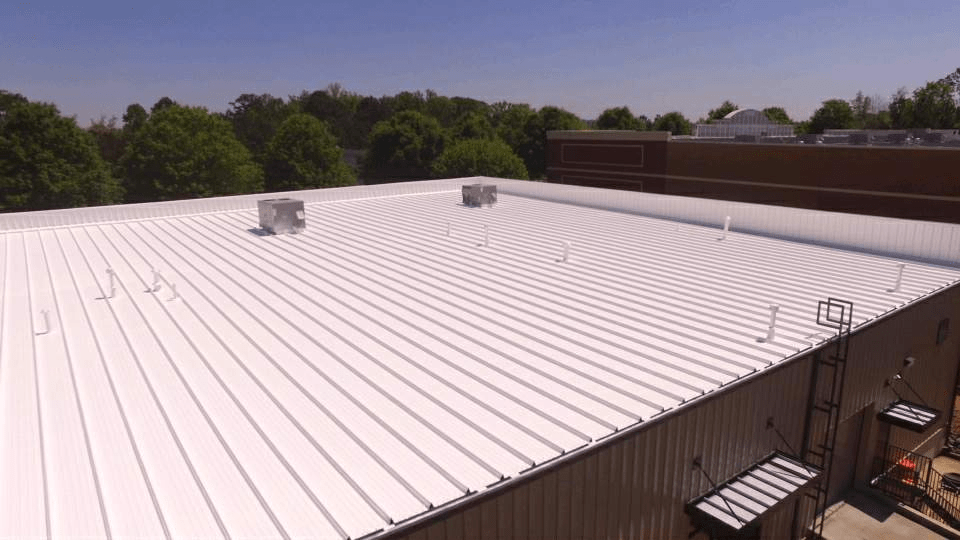
Ask five contractors which commercial roofing type is better, and you’ll get five different answers. Usually based on what they sell. Flat roof advocates point to cost. Metal roof fans point to longevity.
Neither is lying. The real answer depends on your building, your climate, and how long you plan to own the problem.
Here’s the honest breakdown.
The Core Difference (And Why It Matters for Commercial Buildings)
Flat roofs and metal roofs are not really competing products. They solve different problems for different buildings.
Flat Roofing
Flat roofing means low-slope membrane systems: TPO, EPDM, modified bitumen, and similar materials with little to no pitch. They dominate large commercial footprints because they’re cost-effective at scale and leave rooftop space open for HVAC, solar panels, and drainage infrastructure.
Metal Roofing
Metal roofing typically refers to standing-seam or corrugated panels on sloped commercial structures. Common in industrial buildings and new construction, where slope is built in from the start. The upfront cost is higher, but as many property owners find when weighing whether metal roofing is worth it, the long-term math often tells a different story.
Performance Comparison: Lifespan, Leak Risk, and Maintenance
Both systems are proven. Where they differ is in where they fail and how often they fail.
Flat Roofing
A well-installed flat roof lasts 15 to 25 years, depending on the membrane type and how consistently it’s maintained. The weak points are predictable: drainage, seams, and flashings around penetrations. When water pools and has nowhere to go, it eventually finds a way in.
The maintenance burden is real but manageable. Twice-yearly inspections, keeping drains clear, and catching seam separations early will get you to the high end of that lifespan. Skip the upkeep, and you’ll be looking at a replacement well before the 15-year mark.
Metal Roofing
Metal roofs are built for the long run. A properly installed standing seam system can last 30 to 50 years, sheds water and debris naturally, and doesn’t carry the same risk of pooling as a flat membrane.
That said, repairs are more specialized and costly when they do occur. Fastener failures, thermal expansion, and rust at penetration points are the most common culprits.
Cost Breakdown: Upfront vs. Lifetime
Both systems can be the right financial choice depending on how you frame the question.
| Flat Roof | Metal Roof | |
| Upfront cost | Lower | Higher |
| Installation complexity | Simpler labor | More specialized |
| Replacement frequency | Every 15 to 25 years | Every 30 to 50 years |
| Long-term cost of ownership | Over 40 years | Competitive for over 40 years |
| Best for short hold periods | Yes | No |
| Best for long hold periods | No | Yes |
The real question is your time horizon. The same roof looks like a different decision depending on whether you’re selling in five years or holding for thirty.
Climate Matters: What the Southeast Changes About This Calculation
Geography shifts the math more than most people expect. Here’s how each system holds up in hot, humid conditions.
Flat Roofing
In climates like Georgia and the broader Southeast, flat roofs face compounding stress. Intense UV exposure degrades membranes faster than in temperate or dry regions.
Heavy seasonal rainfall demands drainage systems that actually work. Humidity accelerates seam deterioration and shortens the gap between inspections that can wait longer in milder climates.
Metal Roofing
Metal roofs handle heat well, but thermal expansion is more pronounced in high-temperature climates. Panels expand and contract significantly over the course of a single day, and over the years, that movement steadily works on fasteners and seams.
For both systems in the Southeast, reflective coatings are not optional. A cool roof coating reduces heat absorption, lowers cooling costs, and extends the life of materials.
The Cool Roof Rating Council maintains a searchable database of rated products by reflective performance, a useful starting point when evaluating specific materials.
Which Building Types Suit Each System
There are no universal rules here, but the patterns are clear enough to be useful.
Flat Roofing
Flat roofs make the most sense for large commercial footprints where slope isn’t structurally feasible: buildings that need rooftop equipment access, retail strip centers, warehouses, and older urban commercial stock where the roof deck was built flat.
The same logic extends to commercial buildings in challenging climates, where flat systems are often the dominant choice for exactly these practical reasons.
If you need solar panels or rooftop HVAC, a flat roof is typically the more practical platform, which is why the system remains widespread even in climates that are hard on flat roofs.
Metal Roofing
Metal roofs are better suited to sloped structures designed to carry them, agricultural and industrial buildings, new commercial construction where the roof profile is part of the design, and facilities that need a long service life with minimal hands-on maintenance.
For new builds in particular, roofing material selection during construction makes a significant difference in long-term performance, and roofing decisions in new construction deserve more scrutiny than they often get.
Note: When evaluating a building with both, treat each section separately. A flat membrane addition to a metal-roofed warehouse deserves its own inspection and maintenance schedule.
The Third Option Worth Knowing About: Restoration
Here’s what often gets left out of the flat vs. metal conversation: restoration.
For an aging flat roof that hasn’t reached full failure, a coating or restoration system can extend its life by a decade or more at a fraction of replacement cost. Done correctly, it repairs seams and flashings, improves drainage, and applies a protective coating that resets the membrane’s exposure clock.
The Atlanta commercial roofers at Duratec treat restoration as a legitimate first option before recommending a full tear-off, which in a high-UV climate like Georgia’s is often the smartest financial move available.
So Which One Is Better?
Neither system wins outright. The answer depends on what your building actually needs.
Flat Roofing
Flat roofs are the stronger choice for large, low-slope commercial applications where cost efficiency and rooftop access matter most. They’re practical, widely understood, and easier to restore when maintained properly.
Metal Roofing
Metal roofs are the stronger choice for sloped structures where longevity and low ongoing maintenance are the priority. The higher upfront cost is real, but so is the extended service life.
In the Southeast, both systems need more attention than they would in milder climates, and both benefit from reflective coatings and regular professional evaluation. The best roof is the one matched to your building’s actual conditions, not the one a contractor happens to specialize in.
The Bigger Mistake Is Waiting
Whatever system you have, the costliest move is deferring the evaluation. Flat roofs that need restoration get replaced. Metal roofs with failing fasteners become sources of leaks.
When water does get in, the damage compounds quickly, and knowing how to respond before a contractor arrives matters more than most building owners realize, especially for emergency roof leak repairs.