
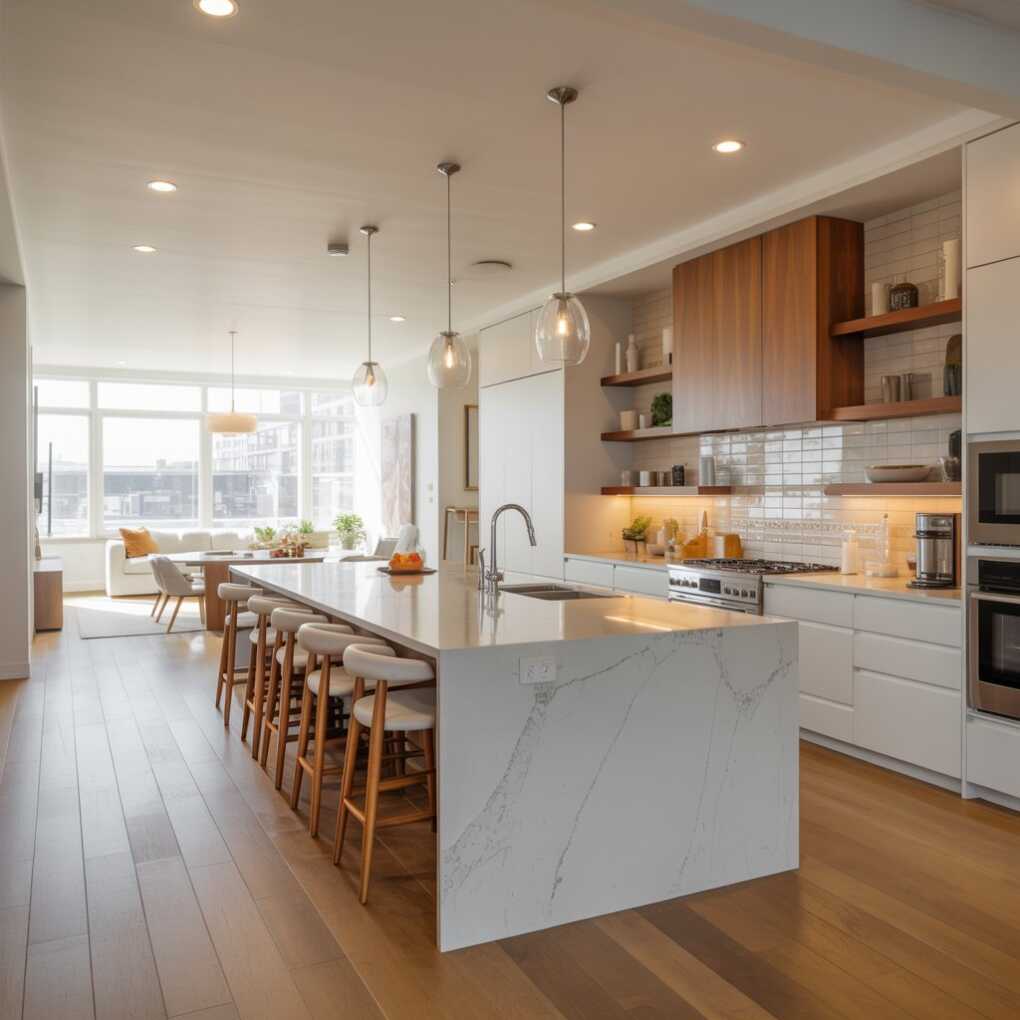
Open-concept kitchens have become a signature feature of modern American homes. By blending the kitchen with the living and dining areas, homeowners create a brighter, more spacious layout that encourages connection and improves the flow of daily life. This trend has grown especially popular in households seeking a multifunctional space that supports cooking, entertaining, and family time all in one place.
But before committing to a major kitchen renovation, it’s worth taking a closer look at both the advantages and challenges of an open floor plan. With the right planning and practical design choices, you can create a functional, stylish environment that truly works for your lifestyle.
Pros of an Open-Concept Kitchen
More Space and Natural Light
One of the biggest benefits of an open floor plan kitchen is the added sense of space. Removing walls brings in more natural light, eliminates dark corners, and creates a seamless connection between rooms. This makes even smaller homes feel airy and inviting.
Better Interaction and Social Flow
In an open-concept kitchen, the cook is no longer isolated. Hosting becomes easier, family communication improves, and everyday routines feel more fluid. Whether you’re preparing dinner while watching kids in the living room or chatting with guests seated at the island, an open layout enhances togetherness.
Flexible, Multifunctional Layouts
Without walls dividing the rooms, your home becomes more adaptable. You can rearrange furniture, create new seating zones, and integrate dining and living spaces more efficiently. This flexibility is especially valuable in busy households where each square foot matters.
Potential Boost in Home Value
Open-concept kitchens often appeal to buyers seeking modern, connected living spaces. A well-executed kitchen remodeling project can improve overall home value and make your property more competitive on the market.
Cons of an Open-Concept Kitchen
More Noise and Less Privacy
Removing barriers between rooms means sound travels more easily. Kitchen appliances, conversations, and televisions blend together, which can become disruptive — especially in active households.
Harder to Hide Everyday Mess
With everything visible from multiple angles, keeping the space tidy requires extra attention. Dirty dishes, cooking tools, and clutter are far more noticeable when the kitchen is always in view.
Fewer Distinct Zones
Open layouts can make it challenging to define separate areas for work, relaxation, or dining. Without partitions, the space may feel less structured unless carefully planned.
Cost Considerations for Remodeling
If creating an open-concept kitchen requires removing walls, adjusting electrical or plumbing lines, or leveling floors, the renovation may involve more labor and time. These structural updates can significantly increase project scope.
Design Tips for a Functional Open-Concept Kitchen
Use Furniture and Fixtures to Define Zones
Even without walls, you can create clear boundaries between spaces. Consider using kitchen islands, sectional sofas, area rugs, or pendant lighting to visually divide the kitchen, dining, and living areas. These elements guide the flow of the room without restricting it.
Maximize Storage Creatively
Open kitchens often have fewer upper cabinets, so smart storage solutions are essential. Full-height pantry cabinets, deep drawers, built-in shelving, and hidden storage within islands can help maintain a clean, organized look.
Prioritize Good Ventilation
Since cooking odors travel easily in open layouts, strong ventilation is key. A high-quality range hood helps control smells and prevents them from lingering around the living spaces.
Choose a Cohesive Color Palette and Materials
Consistency is crucial in an open-concept home. Select complementary colors, finishes, and materials across the kitchen and adjoining areas. Matching or coordinating flooring helps unify the space and strengthen the overall design.
Plan Your Remodel with Professional Support
When preparing for a full kitchen renovation — especially one involving structural work — coordination and craftsmanship are essential. If you’re planning a complete kitchen overhaul, partnering with experienced remodeling professionals like GeorgiaTiles&Remodeling Contractors can streamline every stage of your project, from demolition to the final finishing touches.
Conclusion
Open-concept kitchens offer a bright, connected, and flexible way of living that appeals to many homeowners. But like any major remodeling decision, the best results come from balancing aesthetics with practicality. Understanding the pros and cons — and planning your design thoughtfully — will help you create a kitchen that enhances your home’s functionality and complements your everyday routine.
This publication was produced in collaboration with https://georgiatiles.com/.