
Your backyard should feel like a retreat. Not a fishbowl. Ever feel exposed when trying to relax outside? Like your neighbors can see your every move. It’s frustrating. You want privacy but not to feel boxed in. Like a cage.
This article shows how to get that perfect balance. Privacy without enclosure. Lattice panels, smart planting, strategic screens. All ways to create your own private oasis that still feels open and airy. No need for tall fences that make your yard feel like a prison. Let’s get started.
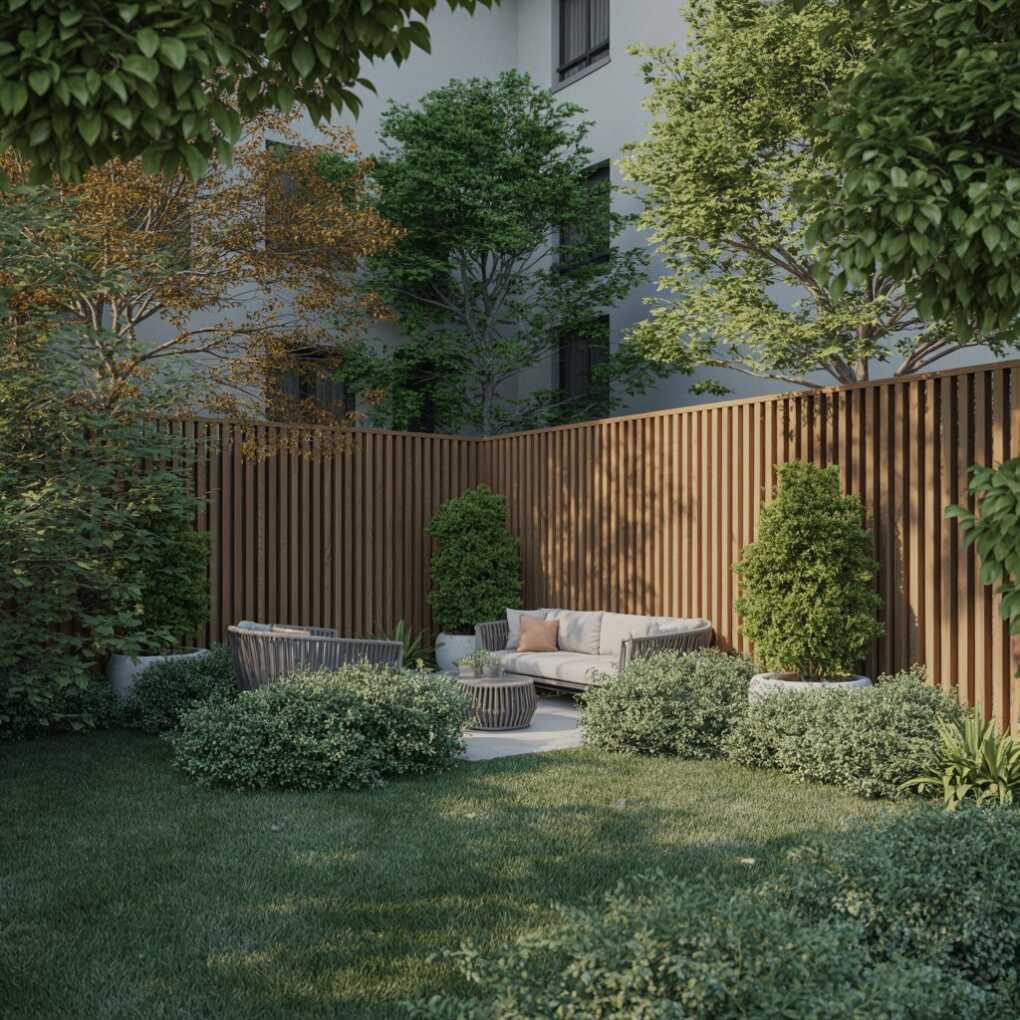
The Art of Open Privacy
Privacy isn’t about blocking everything out. Its about creating visual barriers that work with your space. Smart design makes small yards feel bigger while keeping prying eyes at bay. Less is often more when it comes to outdoor privacy.
Most people think they need a six-foot fence. But that just makes everything feel smaller. Like your stuck in a box. Instead, think layered. Multiple lower elements that work together. Creates depth and interest. You’ll get privacy without losing that open feeling.
“A dense thicket of greenery can turn even a suburban yard into a secret garden,” says Kevin Lenhart, design director of Yardzen. “This plant-based approach tends to cost less than hardscaping, and it looks better doing it.”
The key is creating zones. Not sealing everything off. Think about how you use your space. Then add privacy elements where they matter most. Like near seating areas. Or where neighbors have direct sightlines.
Lattice Panels and Trellises – The Disappearing Walls
Lattice panels are like magic. They block sightlines but let the air flow through. Perfect for creating privacy without feeling trapped. Designers love them for this very reason.
They’re not just functional. Lattice adds texture and visual interest. It’s a design element that serves double duty. Smart.
Pro Tip: Add climbing vines to your lattice. They’ll grow through the openings, enhancing privacy over time. Wisteria or clematis work great. Just be sure to choose plants that suit your climate.
Trellises are another excellent option. They’re relatively inexpensive and easy to install or move around. As Kevin Lenhart explains, they’re “the overachievers of outdoor design—equal parts privacy screen and vertical garden.”
| Material | Cost | Maintenance | Best For |
|---|---|---|---|
| Wood | $$ | Medium | Traditional looks |
| Metal | $$$ | Low | Modern aesthetic |
| Bamboo | $ | High | Temporary solutions |
| Vinyl | $$ | Very Low | Low-maintenance needs |
Place them strategically. Around seating areas. Or to break up long sightlines. They create visual barriers without closing off the entire space. Like curtains for your yard.
Living Walls – Nature’s Privacy Screen
Plants are your best friend when it comes to backyard privacy. They soften hard edges. Add beauty. And create natural barriers that feel organic. Not forced.
Fast-growing shrubs like arborvitae or Leyland cypress work wonders. They create dense visual barriers quickly. Bamboo is another option but be careful. Some varieties spread like crazy.
“Think shrubs, ornamental grasses, and slim fruit trees arranged like a soft green fortress,” recommends Lenhart. “Mixing and matching plants doesn’t have to be a guessing game.”
Pro Tip: Layer your plantings. Short plants in front. Medium in the middle. Tall in the back. Creates depth and makes your yard feel bigger. Not smaller like a solid fence would.
Here’s a list of fast-growing privacy plants:
- Leyland cypress – Grows 3-4 feet per year
- Arborvitae – Evergreen with year-round coverage
- Bamboo – Fast but choose clumping varieties
- Holly – Adds berries and winter interest
- Climbing roses – Beautiful and fragrant
The best part? Plants change with the seasons. Adding visual interest throughout the year. Unlike a boring fence that stays the same.
Strategic Screening – Making Space Feel Bigger
Smart screening makes your yard feel larger. Not smaller. It’s all about how you position elements. And what you use to create those visual barriers.
Portable screens are perfect for renters. Or if you like to change things up. Move them around as needed. Set one up during gatherings. Tuck it away when not in use.
Pro Tip: Use screens with integrated planters. The greenery softens the look. And adds another layer of privacy. Plus it looks way better than plain wood or metal.
Outdoor curtains on a pergola work great too. You can pull them closed for privacy. Open them up when you want that airy feeling. They add a cozy, resort-like vibe to any space.
Furniture placement matters too. Position benches with their backs to areas you want to block. Angle seating into corners framed by greenery. Your furniture becomes part of the privacy solution.
| Screening Type | Flexibility | Cost | Aesthetic |
|---|---|---|---|
| Movable screens | High | $ | Modern |
| Outdoor curtains | Medium | $$ | Cozy |
| Potted plants | High | $ | Natural |
| Fixed trellis | Low | $$ | Structured |
The goal is to create the feeling of privacy. Not total enclosure. Strategic screening does exactly that. Making your space feel intimate without closing it off.
Sound-Softening Landscaping – Because Privacy is More Than Visual
Privacy isn’t just about what you see. It’s about what you hear too. Sound can be just as intrusive as visual lines of sight. Especially in busy neighborhoods.
Dense plantings help absorb sound. Thick hedges. Layered shrubs. Tall ornamental grasses. All these natural elements dampen noise from the street or neighbors.
“Thick plantings not only soften your space, they muffle sound and block sightlines,” says Lenhart. “This technique is one of the most effective out there.”
Pro Tip: Add a water feature. The gentle sound of flowing water masks street noise. Creates a peaceful ambiance. Just be sure to keep it moving to prevent mosquitoes.
Here’s how to layer sound-softening elements:
- Tall evergreen trees – Block distant noise
- Dense shrub layers – Absorb mid-range sounds
- Water feature – Adds soothing white noise
- Outdoor rugs – Reduce echo on hard surfaces
The combination of visual barriers and sound dampening creates true privacy. Making your backyard feel like a separate world. Even in the middle of the city.
Pergolas and Canopies – Creating Intimate Outdoor Rooms
Pergolas are like outdoor rooms. They create defined spaces without closing everything off. Add curtains or screens for adjustable privacy. Perfect for those who want options.
A pergola with a louvered roof gives you control over sun and privacy. Close the louvers for shade and privacy. Open them up when you want that open feeling. It’s the best of both worlds.
Pro Tip: Add string lights to your pergola. They create a cozy glow after dark. And draw the eye inward. Making your space feel more private and contained.
“I often use string lights over dining areas, solar lanterns near lounge spaces, and uplighting behind plants or screens to carve out distinct ‘rooms’ in the yard,” says Jessica Love, an interior designer.
The key with pergolas is to use them to create zones. Not to cover your entire yard. One over your seating area. Maybe another near a dining spot. Creates intimacy without enclosure.
Smart Space Planning – Designing for Privacy
How you arrange your space matters more than you think. Good layout makes small yards feel bigger. And creates natural privacy zones without adding walls.
Place furniture to block unwanted views. A bench with its back to the neighbor’s window. A large planter strategically positioned. Simple moves that create privacy without major construction.
Pro Tip: Create meandering pathways. They slow down the eye. And make your space feel larger. A straight path from the house to the gate feels exposed. Curved paths create discovery and privacy.
Here’s how to plan your space for maximum privacy:
- Create multiple zones – Dining, lounging, garden areas
- Use plants as dividers – Instead of walls or fences
- Add vertical elements – Trellises, screens, tall planters
- Vary heights – Low, medium, and tall plants together
The goal is to guide the eye. Not block it completely. Your yard should feel like a journey. With surprises around each corner. Not a straight line from point A to point B.
When Decks Need Privacy
Raised decks often need special privacy considerations. Being elevated means more visibility from neighboring properties. But adding privacy doesn’t mean covering your entire deck.
Strategic planters work great on deck railings. Or add a pergola with curtains for adjustable privacy. You can close them during gatherings. Open them up when you want that airy feeling.
Pro Tip: Use lightweight screens that attach to your deck railing. They’re easy to remove. And don’t require permanent modifications. Perfect for renters.
If you’re building a new deck, consider its placement carefully. Some spots offer more privacy than others. Choose a corner or side of the house that’s most out-of-the-way. Or work with professional Ellicott City deck building companies to design a deck with built-in privacy elements from the start.
Need a deck that considers privacy from the beginning? Check out Maryland Decking’s Ellicott City deck building companies for expert help creating a private outdoor space that feels open and inviting.
Decks should feel like extensions of your home. Not exposed platforms. With thoughtful design, you can have both privacy and that open-air feeling. It’s all about smart planning and the right elements.
The Final Touches
Small details make a big difference. Outdoor lighting. Strategic furniture placement. Even the way you arrange your plants. All contribute to that perfect balance of privacy and openness.
Don’t forget about vertical space. Tall trees. Climbing vines. Hanging planters. They create privacy without taking up valuable ground space. Making your yard feel larger, not smaller.
Pro Tip: Add mirrors to reflect greenery. They create the illusion of more space. And bounce light around your yard. Just be careful not to create reflections that invade neighbors’ privacy.
“The goal is to layer heights and textures to build visual depth while still feeling lush and inviting,” says Lenhart.
Your backyard should be a place where you can truly relax. Not worry about who might be watching. With these techniques, you can create that perfect private oasis. Without ever feeling closed in. It’s all about balance. And smart design choices.
Conclusion
Creating backyard privacy doesn’t mean building fortress walls. It’s about thoughtful, layered elements that work with your space. Not against it. Lattice panels. Strategic plantings. Smart screening. All create privacy without enclosure.
Your yard should feel like a retreat. Not a cage. With these techniques, you can have both privacy and that open, airy feeling. No more feeling exposed while trying to relax outside.
Start small. Add one or two elements. See how they work in your space. Then build from there. The best privacy solutions feel natural. Like they’ve always been part of your yard.
Remember, less is often more. A few well-placed elements can create more privacy than a solid fence. And they’ll make your yard feel larger, not smaller. Now go create that private oasis you’ve always wanted. You deserve it.