
You spot one missing shingle after that last storm. Just one. No big deal right? Rain’s been scarce. The sun’s out. You’ll get to it… eventually. But time slips away. Weeks pass. Then months. That single gap? It’s not waiting around. It’s working overtime to ruin your home from the inside out.
Ignoring missing shingles is like leaving your front door wide open during a hurricane season. Sure the storm hasn’t hit yet but it’s coming. Your roof isn’t designed to play defense with holes in its armor. That tiny gap you’re ignoring? It’s already inviting trouble you can’t see. Water doesn’t care that you’re busy. It finds the path of least resistance. Always.
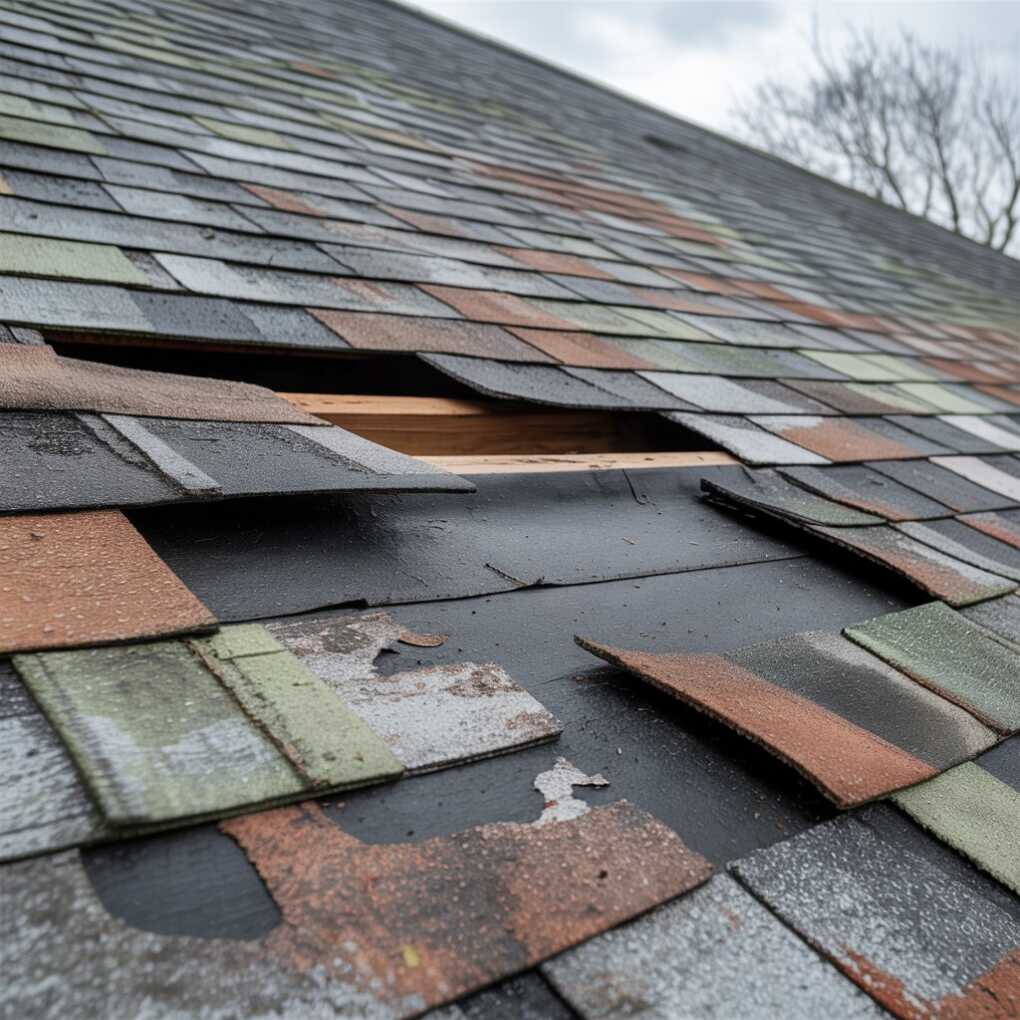
The First Week: One Shingle Gone, But Everything Seems Fine
You notice the missing shingle Monday morning. Just one little gap up there. The weather forecast shows sunny skies for days. No rain in sight. You tell yourself you’ll handle it this weekend. But weekends fill up. That one shingle becomes easy to forget. Out of sight, out of mind right? Wrong.
What you don’t see is the underlayment already getting its first test. Even without rain, wind-driven dust and debris start accumulating in that exposed spot. UV rays beat down on the exposed felt paper or synthetic barrier, accelerating its deterioration. The surrounding shingles? They’re now bearing extra stress as wind catches that unprotected edge. One missing shingle creates weakness in the whole section. It’s not just about rain—it’s about structural integrity failing piece by piece.
Pro tip When shingles go missing, grab binoculars and check your roof weekly. Don’t climb up unless you’re trained. That one gap rarely stays alone for long. Early detection saves thousands.
Month One: Water Sneaks Where It Shouldn’t Be
Rain finally comes. That first storm after your shingle disappeared. The underlayment does its job—mostly. But here’s what nobody tells you: water doesn’t travel straight down. It moves sideways. It crawls. It finds weaknesses you can’t see from the ground. That single gap now channels water under neighboring shingles. The damage spreads faster than the original problem.
The underlayment gets overwhelmed. On older roofs with traditional felt paper, one good rainstorm is all it takes. The paper soaks through, becomes permeable. On newer roofs with synthetic barriers? You might get a few weeks of grace. But grace periods end. Water sneaks beneath layers, following the path of least resistance until it finds a way inside. You won’t see the first water stains yet. They’re brewing in your attic, quietly doing damage where you can’t see them.
By now, the surrounding shingles have taken collateral damage. Water seeping underneath loosens their adhesive strips. More shingles become vulnerable to the next gust of wind. It’s a domino effect—each missing piece makes the next one easier to lose. That single gap has become a gateway for ongoing damage.
“I thought it was just one shingle missing after that summer storm. Six weeks later, we found $8,000 worth of damage in the attic. The water traveled three feet sideways before dripping through the ceiling. Never ignore even the smallest roof issue.” — Sarah K., homeowner who learned the hard way
Month Two: Rot Begins, Mold Follows
Two months in, the real damage begins. Moisture has been working its magic in places you can’t see. The roof decking where water has been pooling starts to soften. Plywood or OSB (oriented strand board) absorbs water like a sponge. Once saturated, it loses structural integrity. That seemingly solid surface above your head? It’s becoming compromised.
Here’s the scary part you won’t notice: mold spores activate within 24-48 hours of moisture exposure. By month two, mold colonies are established in your attic. They’re feeding on damp wood, spreading through air currents, invisible but growing. Black mold? Not always the dangerous kind—but mold of any type means health risks and expensive remediation.
The damage spreads laterally beneath your roof covering. What started as a single missing shingle has created a zone of weakness measuring several feet across. Underlayment has torn away from nail points. Adjacent shingles lift more easily in wind. Each subsequent rain event sends more water under those compromised areas. The problem compounds exponentially—not linearly.
Damage Progression Timeline
| Timeframe | Visible Signs | Hidden Damage | Potential Repair Cost |
|---|---|---|---|
| Day 1-7 | One missing shingle, no water stains | Underlayment exposed to UV damage, dust accumulation | $150-$300 for single shingle replacement |
| Week 2-4 | No visible interior issues | Water infiltration behind underlayment, early wood swelling | $500-$1,200 for localized repair |
| Month 1-2 | First ceiling stains appearing | Decking saturation, mold spore activation | $2,000-$5,000 including attic drying |
| Month 2-3 | Multiple ceiling stains, warped drywall | Significant decking rot, established mold colonies | $8,000+ including structural repairs |
This progression happens faster in humid climates or after frequent rains. Even in dry areas, dew and morning moisture provide enough exposure to start the rotting process. Your roof isn’t just keeping rain out—it’s managing moisture from all sources, constantly.
Month Three: Structural Compromise and Interior Chaos
Three months in, you can no longer ignore the problem. Water stains spread across ceilings like inkblots. Drywall sags. You find puddles after moderate rain. But here’s the reality many homeowners don’t grasp: the visible damage represents just 20% of the actual problem. The rest? Hidden in your attic, rotting your home’s structural bones.
The roof decking—your home’s literal foundation for everything above—is compromised. Sections have softened to the point where they’ll no longer support shingles properly. Even after drying out, water-damaged decking loses significant strength. Nail pull-through becomes a serious issue. Your roof structure is literally weaker than it was three months ago.
Insurance companies hate this scenario. Many policies require “prompt repair” of roof damage. Three months without addressing known issues? That’s negligence in their eyes. Claim denials become likely. You thought you were saving money by waiting. Now you’re facing full out-of-pocket repairs for damage that could have been prevented.
Ever wonder why some roof replacements cost $20,000 instead of $12,000? It’s because homeowners waited too long. What starts as a minor repair becomes a structural nightmare. Replacement isn’t just about shingles anymore. It’s about fixing what water ruined underneath.
Why Your Contractor Might Say “Patch” or “Replace”
So you finally call a roofing company. They inspect your roof. What happens next depends on what they find. Contractors look at three critical factors before making a recommendation:
- Extent of decking damage – How much plywood/OSB needs replacement
- Age of remaining shingles – Older roofs rarely patch well
- Water migration patterns – How far the damage has spread
Here’s the uncomfortable truth: patching only makes sense when:
- The roof is relatively new (under 10 years old)
- Decking damage is minimal and localized
- Surrounding shingles show no signs of deterioration
Most professionals won’t patch roofs over 15 years old. Why? Because the surrounding shingles have lost flexibility. New patches won’t bond properly. UV exposure has hardened the remaining surface. Within months, those patched areas will start failing again.
Replacement becomes necessary when:
- More than 20% of decking shows water damage
- Shingle granules are significantly worn elsewhere
- Underlayment has torn beyond repairable sections
Don’t be surprised if the estimate is higher than expected. Water damage always spreads farther than visible signs indicate. Trust contractors who show you actual attic conditions, not just roof surface observations.
Make smart choice. Get multiple inspections. Look for companies that offer drone-assisted assessments—they reveal damage patterns invisible from ground level. For residents of Seward, NE, finding a local roofing company in Seward NE early can prevent minor issues from becoming catastrophic failures.
The Christmas Light Connection You Never Saw Coming
Christmas season approaches. You want to decorate. But those missing shingles? They create perfect trapdoors for holiday disasters. Most DIY Christmas light installers make matters worse by hammering staples through vulnerable roof areas.
Professional Christmas light installation companies know better. They route wiring discreetly along gutters and fascia using specialized clips—not staples. These clips grip without piercing roof surfaces. Wiring tucks neatly behind downspouts and beneath eaves. No damage to compromised areas. Clean aesthetics. Total safety.
Professional Lighting Installation: Key Differences
| Professional Method | DIY Approach |
|---|---|
| Plastic clips that grip without penetration | Staples driven into roof decking |
| Wiring concealed behind gutters | Wires draped visibly over roof surface |
| Connections made away from vulnerable zones | Connections often made directly on damaged sections |
| Inspection for structural weaknesses first | Rarely checks roof condition beforehand |
This matters because every additional penetration in compromised roof areas creates new leak pathways. Professionals work with your roof’s current condition—not ideal scenarios. They know your missing shingles have already weakened structural integrity. No extra holes. No unnecessary stress. Just safe beautiful lights that won’t accelerate existing damage.
Your roof needs all the protection it can get after months of neglect. Don’t compound the problem with seasonal decorating mistakes. Hire pros who understand roofing vulnerabilities. They’ll keep your holiday spirit bright without making your roof problems worse.
Don’t Wait For The Drip, Drip, Drip
That drip you finally hear? It’s months late. Water damage works in silence. It spreads where eyes don’t see. What starts as a missing shingle becomes decking rot becomes interior destruction becomes financial disaster.
Here’s what most homeowners don’t realize: roof damage compounds exponentially, not linearly. Waiting two months doesn’t double the problem—it multiplies it fivefold. That $300 repair becomes an $8,000 catastrophe through sheer neglect.
The roof doesn’t care about your schedule. It doesn’t wait for payday. Water exploits weaknesses immediately. Every day you delay is a day moisture works on your home’s structural integrity. There’s no “wait and see” with roofing damage. Only “act now” or “pay later.”
Check your roof after every major storm. Use binoculars from the ground—no climbing necessary. Look for shingle debris in gutters. That’s nature’s warning system. Missing shingles aren’t cosmetic issues. They’re active breaches in your home’s defense system.
Remember: the most expensive roof repair is the one you put off until it’s too late. Your home’s structure is worth more than a few hundred dollars in prompt repairs. Address missing shingles within days not months. Because that small gap? It’s not waiting around. It’s already working overtime to ruin your home from the inside out.
Don’t be the homeowner telling neighbors “I wish I’d called sooner”. Be the one who caught it early. Fixed it fast. Saved thousands. Your future self will thank you when the next big storm hits and your roof holds strong—because you took care of that one missing shingle before it became a disaster.
Signs Your Missing Shingle Has Caused Hidden Damage
- Shingle granules accumulating in gutters (more than normal)
- Dark streaks on ceiling drywall even when not raining
- Musty odors in upper floors with no obvious source
- Increased energy bills from compromised insulation
- Visible warping along roof edges from ground level
- Unexplained spikes in indoor humidity levels
Time leaks faster than water. Don’t wait for the obvious signs. Act before the invisible damage becomes visible destruction. Because with roofing problems, the silence isn’t golden. It’s costing you money while you sleep. Check that roof. Call a pro. Fix it now. Your wallet—and your home—will thank you later.