
You pull down the storage bin in November. That hopeful feeling? Gone. Replaced by the horror of tangled wires. Brittle strands. Dead bulbs that just worked last year. It shouldn’t be this hard. Exterior lighting storage isn’t just about convenience—it’s about survival. Your lights are screaming for help. And if you don’t listen? Next season becomes a $500 mistake. Let’s fix this.
You think you’re being careful. Tossing strands “neatly” into a bin. Slapping a lid on it. But those wires? They’re twisting. Kinking. Becoming brittle in the dark. Waiting to fail when you need them most. Don’t let holiday magic die in storage. Let’s unpack the real science—and brutal truths—behind proper exterior lighting storage.
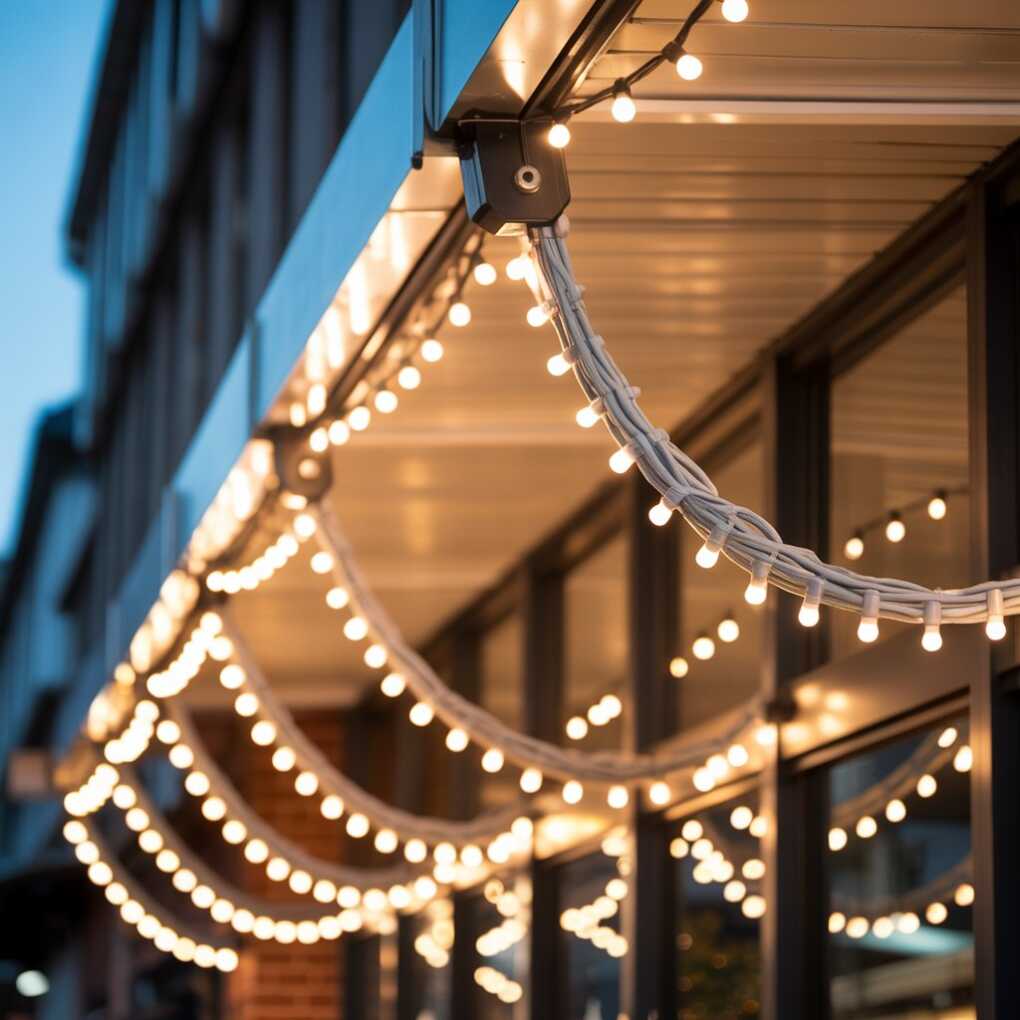
Why Your Lights Are Screaming for Better Storage
Most homeowners don’t realize it: poor storage kills lights faster than winter weather. Those brittle wires you find every November? They didn’t just happen. PVC insulation undergoes hydrolysis when exposed to moisture. Translation: it gets crispy. Snap. Gone. Add temperature swings—like attic summers hitting 140°F—and you’ve got a slow-motion disaster.
T=k⋅e−Ea/RT describes this degradation. But who cares about equations? You care that your $300 light strand failed because you stored it with last year’s beach towels. Moisture seeped in. Heat baked it. Wires became brittle. Bulb sockets cracked. Suddenly you’re rewiring the whole house mid-blizzard.
“Most holiday lighting issues don’t happen on installation day. They start months earlier, with poor storage.”
— bethelightdecor.com
Let’s be real. You’ve tossed lights into bins like spaghetti. You thought it was fine. Until half the strand flickered last year. Or worse—you found melted wires from a short circuit. That’s not bad luck. That’s storage rage.
Pro Tip: The $2 Test That Saves $200
Before storing, plug in each strand. Run them for 5 minutes. Check for:
– Hot spots (indicates internal damage)
– Flickering (weak connections)
– Dim sections (voltage drop from corrosion)Toss anything suspicious. Better to replace one strand now than risk a fire later. Safety first—always.
Spool Systems That Actually Work (Not the Gimmicky Ones)
Forget those $40 plastic reels sold at big-box stores. Pros avoid them. They’re overpriced. Hard to maneuver. And they kink wires at sharp angles. Real solutions cost nearly nothing. Try this:
Grab an A4-sized cardboard sheet. Cut slits along both longer edges. Start with the plug end. Lay icicle lights flat. Wrap them around the cardboard using slits to secure. No tension. No twists. Just smooth, lazy loops. Remove carefully. Slide into a bin. Done.
The “Magic Ball” Method (Works for 99% of Strands)
1. Hold female end (socket end) in one hand
2. Wrap 3-4 loops around palm to form base
3. Slide off hand—rotate direction slightly each wrap
4. Tuck male plug under final loops to lock
thunderlightingsupply.com calls this the pro secret. Why? It prevents strain at connection points—the #1 failure spot. Keep bundles under 2 feet. Smaller = less tension. Less failure.
Spool Comparison: What Really Works
| Method | Tangle Risk | Wire Strain | Cost | Verdict |
|---|---|---|---|---|
| Cardboard Slits | Low | Minimal | Free | ✅ Do this |
| Plastic Reels | Medium | High | $20-$40 | ❌ Skip it |
| Loose in Bin | High | Extreme | $0 | 🔥 Fire hazard |
| Zip-Tied Coils | Medium | Medium | $2 | ⚠️ Risky |
Label Everything Like Your Sanity Depends On It (which it does)
You’re shivering on a ladder in December. You need those specific C9 lights for the roof line. Instead you’re opening ten bins. Untangling five strands. Cursing. This isn’t decorating. It’s punishment. Fix it with military-grade labeling.
Color-code by location:
- 🔴 Red tags = Roof line
- 🔵 Blue = Gutters
- 🟢 Green = Tree wraps
Use weather-resistant tags. Not paper. Not masking tape. Actual plastic tags (christmasworld.com recommends laminated labels). Attach with nylon ties. Write voltage rating too. Why? Because 120V strands cannot mix with 24V. One mistake fries everything.
Critical Pre-Storage Checklist
- ✅ Test all bulbs (replace dead ones)
- ✅ Wipe off sap, dirt, salt residue
- ✅ Check for cracked sockets
- ✅ Measure and note strand length
- ✅ Label with zone + voltage
DON'T: "Roof lights"
DO: "Red C9 Roof Line - 120V - 25ft"
Moisture and Temperature: The Silent Killers
Your attic is 140°F in August. Your basement hits 80% humidity. Both murder lights. PVC insulation becomes brittle when stored above 104°F (dekra-lite.com confirms this). Below 32°F? Wires freeze stiff. Snap when bent.
Climate-controlled storage costs 15-30% more. But ask yourself: Is replacing $1,200 in commercial-grade C7 lights cheaper? Or renting a $50/month climate-controlled unit? Math doesn’t lie. For businesses, it’s non-negotiable. For homeowners? Depends how much you hate untangling wires at 2AM.
Fight Moisture Like a Pro
| Solution | How It Works | Cost | Lifespan Gain |
|---|---|---|---|
| Silica Gel Packs | Absorbs humidity in bins | $0.25 ea | 2+ years |
| Vacuum Sealing | Removes air/moisture completely | $20 | 3+ years |
| Cedar Chips | Repels moisture & insects | $5 | 1 year |
| Plastic Bins | Blocks dust but NOT moisture | $10 | 6 months |
Pro move: Toss 4-5 silica packets per bin. Replace them every April. Check bins quarterly for condensation. If you see fog inside? Wipe it NOW. One lapse = corrosion city.
Why Pros Outsource Storage (And You Should Too)
Let’s be blunt. Most homeowners fail at storage. Always. They prioritize cost over quality. Skip testing. Use wrong containers. Then panic when strands fail mid-installation. Commercial companies? They treat storage like sacred duty.
“Proper storage ensures decorations withstand the test of time. It means they’ll be ready for seasons to come…”
— dekra-lite.com
How does it work? You take lights down. Pros collect them. Inspect every bulb. Clean salt/sap residue. Test voltage consistency. Store in climate-controlled warehouses on padded racks. Next season? They reinstall tested, guaranteed strands. No tangles. No failures. Just magic.
The Real Cost of DIY Storage
* 2 hours untangling lights = $30 lost time
* 3 failed strands @ $40 each = $120
* Extra extension cords (safety hazard) = $50
TOTAL: $200+ PER SEASON
Meanwhile professional storage runs $75-$150 annually. They warranty the lights too. You get reliability. Peace of mind. Time back. For many homeowners? It’s cheaper than doing it wrong.
If you’re in Augusta, GA—stop battling tangled wires. Trust the experts. Get flawless setup and storage with commercial holiday light installation Augusta GA services. They handle teardown, storage, and pristine reinstallation. No stress. No tangles. Just perfection.
How Pros Route Wires: Clips Beat Staples Every Time
Here’s what you don’t see on pro displays: staples. Nails. Haphazard wires. Pros route lines invisibly along gutters and fascia. Using clips. Not staples. Why?
Staples cut insulation. Create pinch points. Invite moisture. Cause shorts. They look “secure” but are literal time bombs. Clips? Expand with temperature shifts. Distribute pressure evenly. Keep wires floating away from wood (no rot, no corrosion).
Clip vs. Staple Breakdown
- Staples:
- Damage insulation on installation
- Cause stress fractures in winter
- Attract moisture at penetration points
- Void most manufacturers’ warranties
- Clips:
- Allow wires to breathe and flex
- Prevent abrasion against surfaces
- Maintain wire integrity for years
- Professional installers only use these
It’s not decoration. It’s engineering. A single clip costs pennies. But it saves hundreds in wire replacements. And prevents fires. If you see staples on holiday lights? That installer cut corners. Run.
The Final Word: Store Like Your Holidays Depend On It (They Do)
You wouldn’t park your car outside all winter without starting it. So why treat your $800 lighting display like junk? Proper storage isn’t optional—it’s the backbone of holiday joy. Test first. Clean thoroughly. Spool smart. Label ruthlessly. Control moisture. Choose temperature wisely.
Or skip the headache entirely. Let the pros handle it. Companies like purelightingsc.com specialize in storage that works. Climate-controlled facilities. Military-grade labeling. Rigorous pre-storage inspections. For $100/year, they preserve your investment better than you ever could.
Here’s the truth: Your lights aren’t just wires and bulbs. They’re memories. Family moments. The sparkle that made your kids gasp. Treat them like treasures—not afterthoughts. Next November, when you open that bin and everything just works? That’s the real holiday miracle.
Don’t wait until November.
Do it now. While the season’s fresh.
Your future self will thank you.
Probably with hot cocoa.