
Texas summers are known for extreme temperatures, intense sunlight, and long stretches of heat that can place serious strain on residential and commercial HVAC systems. When outdoor temperatures regularly climb into the triple digits, your air conditioner has to work harder and longer just to maintain a comfortable indoor environment. Without proper maintenance and care, this constant demand can lead to reduced efficiency, higher utility bills, and unexpected breakdowns.
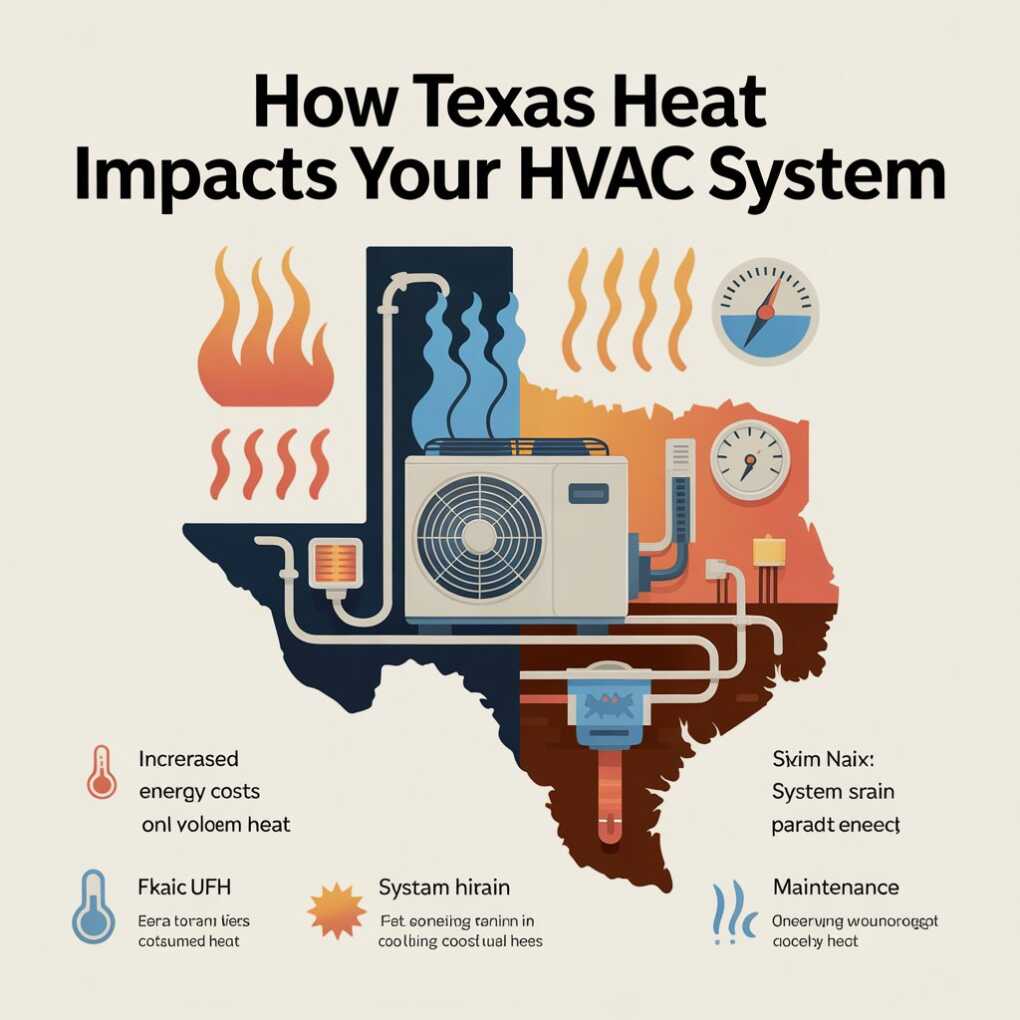
One of the biggest ways Texas heat impacts your HVAC system is through increased workload. During peak summer months, your air conditioner may run almost continuously throughout the day. This nonstop operation causes wear and tear on essential components such as the compressor, fan motor, and condenser coils. Over time, these parts can become less efficient or fail completely if they are not properly maintained.
Another major issue caused by extreme heat is reduced cooling efficiency. When temperatures rise outdoors, your system has a harder time transferring heat out of your home. Dirty filters, clogged coils, and low refrigerant levels only make the problem worse. As a result, homeowners often notice uneven cooling, weak airflow, or rooms that never seem to reach the desired temperature.
Texas heat can also significantly increase energy consumption. The harder your HVAC system works, the more electricity it uses. Older systems or units that have not been serviced regularly tend to consume even more energy during heat waves. This can cause monthly utility bills to rise dramatically during the summer season. Scheduling routine inspections with professionals like Austin Air Conditioning can help identify efficiency problems before they become expensive repairs.
In addition to higher energy costs, excessive heat can shorten the overall lifespan of your HVAC system. Systems that are forced to operate under constant stress year after year may wear out much faster than expected. Preventive maintenance is one of the best ways to protect your investment and extend the life of your equipment. Regular tune-ups ensure that all components are functioning properly and allow technicians to catch small problems before they become major failures.
Poor indoor air quality is another concern during hot Texas summers. Dust, allergens, and humidity levels can build up when HVAC systems struggle to circulate air effectively. Dirty air filters and neglected ductwork can worsen respiratory issues and create an uncomfortable indoor environment. Replacing filters regularly and keeping your system clean helps maintain healthier air inside your home.
To reduce the impact of Texas heat on your HVAC system, homeowners should take proactive steps throughout the year. Changing air filters, sealing air leaks, using programmable thermostats, and scheduling seasonal maintenance can all improve performance and efficiency. Keeping the outdoor unit free from debris and ensuring proper airflow around the system can also help prevent overheating.
Ultimately, the extreme Texas climate makes HVAC maintenance more important than ever. Investing in regular service from trusted professionals like Austin Air Conditioning can improve system reliability, lower energy costs, and keep your home comfortable even during the hottest days of summer.