
Let me tell you about a business owner in Boise, Idaho. He runs a small warehouse off Overland Road. Last spring, after a particularly rough winter, he noticed a damp patch spreading across his ceiling tiles. He ignored it for two weeks. By the time he called a roofer, what could have been a $400 fix had turned into a $6,000 nightmare. All because of one small crack in his flat roof that nobody checked.
That story is more common than you’d think in Boise. Flat roofs are everywhere — on commercial buildings, modern homes, and historic downtown structures. And they’re tough. But they’re not invincible. If you own one, you need to know how to take care of it. This article breaks it all down. Simple, practical, and honest.
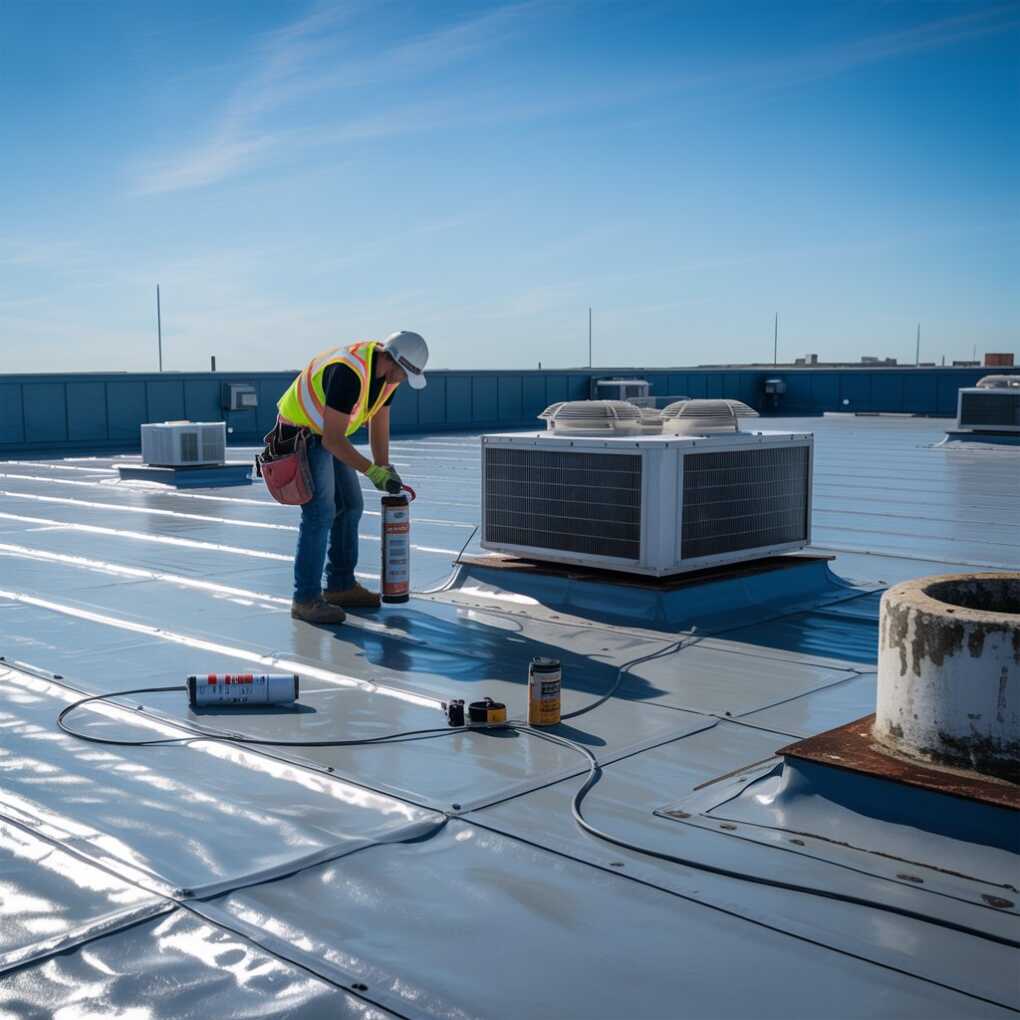
Why Flat Roofs Need Special Attention in Boise
Boise isn’t exactly a forgiving climate. Summers hit hard with intense UV exposure. Winters bring freezing temperatures, occasional snow loads, and freeze-thaw cycles that can split even well-installed membranes. It’s a place where roofs get tested. Every single season.
Flat roofs, unlike pitched roofs, don’t naturally shed water. They rely entirely on proper drainage systems, membranes, and slope design to move moisture away. When any of that breaks down — even a little — water finds a way in. And once water is in, the damage compounds fast. Insulation gets soaked, structural decking rots, and mold quietly starts its work. The stakes are real.
“A flat roof isn’t maintenance-optional. In a climate like Boise’s, skipping inspections isn’t saving money — it’s borrowing trouble.” — Tim Hargrove, Licensed Roofing Contractor, Boise, ID
The Most Common Flat Roof Problems Boise Property Owners Face
Before we get into maintenance tips, it helps to know what you’re actually up against. Here’s a quick look at the most frequent issues reported by Boise homeowners and commercial property managers:
| Problem | Cause | Risk Level |
|---|---|---|
| Ponding Water | Poor drainage or clogged drains | High |
| Membrane Blistering | Trapped moisture or poor adhesion | Medium–High |
| Cracked Flashing | UV damage and thermal expansion | High |
| Punctures or Tears | Foot traffic, debris, weather | Medium |
| Seam Separation | Age, movement, improper installation | High |
| Blocked Drains | Leaves, debris, sediment buildup | High |
See that table? Every single one of those problems is preventable. Or at the very least, manageable — if you catch them early.
How Often Should You Inspect Your Flat Roof?
Here’s where most people get it wrong. They think once a year is enough. It’s not. Not in Boise.
A proper inspection schedule for flat roofs in Idaho’s high desert climate should look something like this:
- Spring (April–May): Assess winter damage. Check for cracks, membrane shifts, and drainage issues after snow and ice.
- Summer (July–August): Look for UV blistering and seam stress from heat expansion.
- Fall (October): Clear all debris and drains before the cold hits. This one is non-negotiable.
- After Major Weather Events: Heavy hailstorms, windstorms, and sudden temperature drops all warrant a quick check.
Pro Tip 💡: Don’t walk on your flat roof unless you know what you’re doing. Membrane surfaces — especially TPO and EPDM — can be punctured or stressed by improper foot traffic. Use a professional for thorough inspections, and limit your own access to visual checks from the roofline edge or a drone.
Consistent Roof Maintenance Boise is the single most cost-effective thing you can do as a property owner. Period.
Step-by-Step Flat Roof Maintenance Checklist
Let’s get practical. Whether you’re a homeowner in the North End or a property manager overseeing a commercial building in the Treasure Valley, this checklist works.
1. Clear the Drains and Gutters First
Start here. Always. Clogged drains are the number one cause of ponding water, which is the number one killer of flat roofs. Pull out all leaves, twigs, and sediment from roof drains, scuppers, and gutters. Do this every fall. Do it after every major wind event too.
2. Inspect the Membrane Surface
Walk the perimeter carefully — or better yet, have a professional do it. Look for:
- Bubbling or blistering
- Visible cracks or splits
- Areas where the membrane has pulled away from the edge
- Any spots that look discolored or damp
These are your early warning signs. Don’t dismiss them.
3. Check All Flashings
Flashings are the metal strips around vents, HVAC units, skylights, and roof edges. They’re the most vulnerable points on any flat roof. In Boise’s climate, thermal expansion and contraction takes a serious toll on them over time. If you see gaps, lifting edges, or rust — that’s a problem needing immediate attention.
4. Look for Ponding Water
After a rain, go up and look. If you see standing water 48 hours after precipitation, you’ve got a drainage problem. Ponding water adds weight, degrades membrane material, and will eventually find a way through. It can’t just be ignored.
5. Trim Overhanging Trees
Boise homeowners love their mature trees. Understandable. But overhanging branches drop debris directly onto flat roofs, scratch membrane surfaces during wind, and create perfect conditions for moss and algae growth. Keep branches trimmed back at least six feet from the roof edge.
6. Schedule a Professional Inspection Annually
DIY checks have limits. A licensed roofer can find problems that aren’t visible from the edge. They use tools — moisture meters, infrared cameras, and experience — to catch what you’d miss. It’s worth it.
When Maintenance Isn’t Enough — Knowing When to Call for Repairs
There’s a line between maintenance and repair. Crossing it doesn’t mean you failed. It just means your roof is telling you something.
Call a professional for Roof Repair Boise immediately if you notice any of the following:
- Interior water stains or active leaks — This means water has already breached the membrane.
- Sagging ceiling sections — Could indicate saturated insulation or structural compromise.
- Visible daylight through roof boards — A serious structural issue.
- Flashing that’s completely separated — No sealant or patch will hold here long-term.
- Membrane tears larger than 2 inches — These require professional repair, not DIY tape.
Don’t wait. Every day a leak goes unaddressed, the repair cost grows. Often exponentially.
“The biggest mistake property owners make is assuming a small stain or damp spot can wait until spring. In most cases, that delay doubles the cost of the repair.” — Bulletproof Roofing LLC, Boise, ID
Flat Roof Materials Common in Boise — And How to Maintain Each On
Not all flat roofs are created equal. The maintenance approach depends on the material your roof is made of. Here’s a quick breakdown of the most common types found on Boise properties:
| Roofing Material | Lifespan | Key Maintenance Need |
|---|---|---|
| TPO (Thermoplastic Polyolefin) | 15–25 years | Seam inspections, UV checks |
| EPDM (Rubber Roofing) | 20–30 years | Puncture checks, adhesive monitoring |
| Modified Bitumen | 15–20 years | Blister removal, resurfacing |
| Built-Up Roofing (BUR) | 20–30 years | Gravel distribution, crack sealing |
| PVC Membrane | 20–30 years | Weld seam inspections, edge checks |
If you’re not sure what type of roof you have — and you’d be surprised how many people don’t — a quick call to a local roofing contractor can answer that in minutes. Knowing your material means you can maintain it correctly instead of guessing.
The Real Cost of Ignoring Flat Roof Maintenance
Let’s talk numbers. Because sometimes that’s what makes it real.
A routine flat roof inspection in Boise typically costs between $150 and $400. Minor repairs — patching a small seam separation or resealing flashing — might run $300 to $800. These are manageable expenses. Annoying maybe. But manageable.
Now compare that to what happens when maintenance is ignored:
- Water damage to interior structure: $2,000–$10,000+
- Full membrane replacement: $5,000–$15,000 depending on roof size
- Structural deck repair: $8,000–$25,000+
- Mold remediation: $1,500–$6,000+
The math isn’t hard. Preventative Roof Maintenance Boise pays for itself many times over.
Pro Tip 💡: Many roofing companies offer annual maintenance contracts for commercial flat roofs. These plans typically include two inspections per year, drain cleaning, minor repairs, and priority scheduling. For business owners managing larger buildings, this is almost always worth the investment.
Special Considerations for Boise’s Climate
Boise sits at just over 2,700 feet elevation. It gets around 12 inches of precipitation per year, but what matters more than volume is the freeze-thaw cycle. Water enters a tiny crack, freezes overnight, expands, and makes the crack bigger. That happens dozens of times per winter. Over several seasons, small unaddressed cracks become major failures.
Snow is another factor. Boise doesn’t get buried, but a few inches of wet, heavy spring snow on a flat roof adds real weight. Most well-designed flat roofs handle this fine. But if drainage is compromised, or the roof is already weakened — it adds stress at exactly the wrong time.
UV exposure is underestimated too. At Boise’s elevation and with its 206 sunny days per year, UV degradation is a constant pressure on roofing membranes. Light-colored membranes like TPO and PVC reflect UV better. Darker materials like EPDM absorb more heat and can age faster in Boise’s sun if not properly maintained.
Hiring the Right Contractor for Flat Roof Maintenance in Boise
Not everyone who calls themselves a roofer knows flat roofs. It’s a specialized skill set. When hiring a contractor in Boise, look for these things:
- Licensed and insured in Idaho — Non-negotiable.
- Experience specifically with flat roof systems — Ask for examples.
- Local reputation and verifiable reviews — Google, BBB, and word-of-mouth all matter.
- Clear written estimates — Any contractor who won’t put it in writing isn’t worth your time.
- Warranty on workmanship — A confident contractor stands behind their work.
Ask direct questions. Don’t be shy. “How many flat roofs have you worked on in the last year?” is a perfectly fair question. So is “What membrane systems are you certified to install and repair?” A good contractor will welcome the scrutiny.
For professional Roof Repair Boise services you can trust, look for contractors with deep local roots and documented commercial flat roof experience.
Final Thoughts — Your Flat Roof Is an Asset, Not a Liability
Here’s the thing about flat roofs. People sometimes talk about them like they’re a problem. “Oh, flat roofs are always leaking.” You hear that a lot. But the truth is — a well-maintained flat roof performs brilliantly for decades. The issue isn’t the design. It’s the neglect.
Think about it differently. Your flat roof is protecting everything beneath it. Your inventory. Your equipment. Your family. Your livelihood. It deserves attention. Not just when something goes wrong. But consistently, seasonally, proactively.
Boise is a growing city. Properties here are valuable. And a roof that’s quietly failing is silently draining that value every day.
So don’t be like that warehouse owner on Overland Road. Get ahead of it. Schedule the inspection. Clear the drains this fall. Know your roof material. Build a relationship with a local roofing professional who’ll give you straight answers.
That’s not just good maintenance advice. That’s good ownership.
For professional flat roof inspections, maintenance, and repairs across Boise and the Treasure Valley, visit Bulletproof Roofing LLC — local experts with a reputation built on honest work and lasting results.