Glass has evolved from a simple material for windows and doors into an essential architectural element that defines the look and performance of modern spaces. Recent innovations in glass technology have enabled designers and homeowners to utilize glass as a solution for enhancing energy efficiency, promoting sustainability, and achieving spatial versatility. Companies such as Kennedyglass.com are at the forefront of these transformations, offering products and installations that address the needs of contemporary living. Whether in residential or commercial settings, the new era of glass solutions is shaping environments that are both functional and beautiful.
Thanks to enhancements in transparency control, structural strength, and environmental performance, glass now plays a decisive role in shaping the aesthetics and effectiveness of our everyday spaces. With adaptable properties and seamless integration, modern glass enables privacy when needed, sunlight when wanted, and thermal comfort all year round.
This shift reflects not only changing visual preferences but also broader cultural trends toward minimalism, sustainability, and flexibility in design. For designers and homeowners alike, glass opens up a world of creative possibilities—facilitating the creation of spaces that are both open and dynamic, yet private and energy-efficient on demand.
As these trends continue, understanding how glass can be employed across different applications—including offices, homes, and public buildings—is increasingly vital. From innovative technologies to frameless partitions and energy-efficient glazing, modern glass solutions are setting new standards in functionality and style.
Embracing Smart Glass Technology
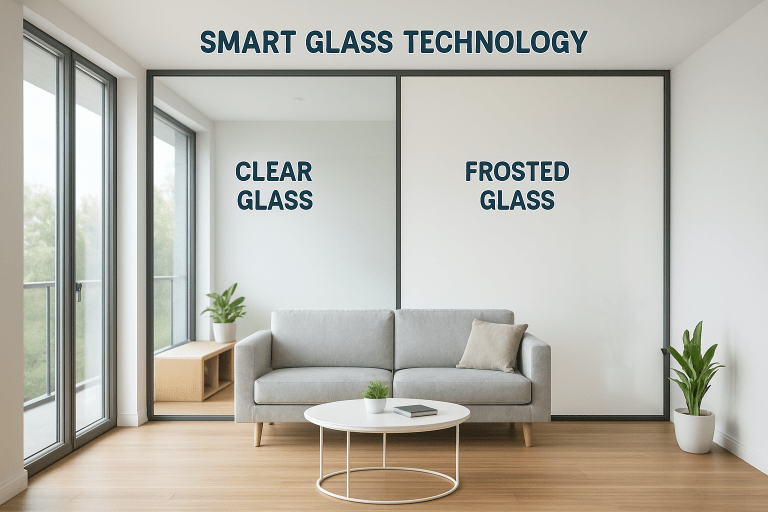
One of the most groundbreaking innovations in the glass industry is smart, or switchable, glass. This technology enables the transparency of glass panels to change instantly, providing privacy or openness as needed. Smart glass can be controlled using wall switches or even mobile devices, making it an ideal solution for areas that serve multiple functions at different times of day—such as conference rooms that convert to private offices or bathrooms that transform from open to secluded with the touch of a button.
For example, systems like Smart Glass Country’s SPACES offer rapid switchability between transparent and frosted states, redefining what’s possible in office and residential layouts. Beyond privacy, this technology contributes to energy efficiency by minimizing heat gain or loss, lessening the reliance on artificial climate control systems.
According to Architectural Digest, the installation of smart glass in windows and partitions can significantly reduce energy consumption while supporting healthier and more productive indoor environments.
Frameless Glass Designs for Minimalist Aesthetics
The trend toward open-plan and minimalist interiors has driven the popularity of frameless glass partitions, doors, and shower enclosures. By removing visible supports and bulky framing, these solutions make rooms feel larger and brighter, emphasizing uninterrupted views and smooth transitions between different zones. Frameless glass is especially effective in small apartments and offices, where the perception of space is crucial.
Beyond their visual benefits, frameless designs promote connectivity, collaboration, and accessibility—values that increasingly define modern workplaces. In homes, these concepts translate into living spaces that feel unified and welcoming, with natural light penetrating more deeply and reducing the need for artificial lighting.
Key Characteristics of Frameless Glass
Enhanced Spatial Perception: Without frames, glass partitions become nearly invisible, extending sightlines.
Modern Aesthetics: Clean lines and transparency complement contemporary and minimalist interiors.
Flexibility: Easily reconfigured to evolve with changing needs or tastes.
Frameless glass solutions have been highlighted in The New York Times as a centerpiece of trendsetting renovations, enabling designers to push the boundaries of spatial ingenuity.
Integrating Glass into Multifunctional Spaces
Glass is integral in designing spaces that serve more than one purpose. In open-plan offices, movable glass partitions can create temporary meeting rooms or quiet zones without compromising connectivity or natural light flow. Similarly, in homes, glass can separate a kitchen from a living room or enclose an office nook—offering acoustic control without sacrificing openness.
Beyond divisions, glass serves as a functional surface—doubling as markerboards or interactive projection screens in collaborative work environments and educational facilities. This type of ingenuity exemplifies how glass can be both structural and interactive, supporting the increasing demand for adaptable, tech-enabled interiors.
Innovative Glass Applications in Modern Design
Modern glass is not just for windows or walls—it redefines how buildings look and function. Companies like River Glass Designs fuse creative engineering and artistry to deliver dramatic entrances and seamless transitions. Sliding or folding glass doors bridge indoor and outdoor spaces, while bespoke glass staircases and balustrades add a sense of luxury and innovation to custom homes and commercial buildings.
These creative applications underscore the versatility and premium feel glass brings to modern spaces. Custom sandblasting, colored interlayers, and digital printing also make glass a canvas for personalized design, expanding options far beyond traditional clear panes.
Sustainable Glass Solutions
As environmental concerns grow, the demand for sustainable building materials has prompted manufacturers to develop high-performance glass with better durability, safety, and insulation. Low-emissivity (Low-E) and insulated glass units (IGUs) minimize energy transfer, reducing a building’s heating and cooling loads. Meanwhile, laminated glass enhances security while filtering ultraviolet rays that can fade furnishings and artwork.
By supporting natural daylighting and offering exceptional thermal performance, modern glass products help buildings meet rigorous green building standards such as LEED and WELL. According to Green Building Advisor, the use of advanced glazing significantly enhances occupant comfort and long-term sustainability, lowering utility costs and reducing a property’s environmental footprint.
Conclusion
Modern glass solutions are revolutionizing the design and experience of everyday spaces. From the transformative power of innovative glass technology and the streamlined sophistication of frameless systems, to multifunctional applications and sustainability-driven innovation, glass continues to provide countless opportunities for architects, designers, and homeowners. Today’s glass is not just a material—it’s a catalyst for better living, productivity, and energy-conscious design choices that shape the spaces of tomorrow.