
Architectural and construction material options are more versatile and sophisticated than ever before. Architects and builders in Australia and internationally often choose aluminium cladding for its versatility, durability, fire safety, and the many other advantages it offers. The first choice that must be made is between solid aluminium cladding sheets and non-combustible aluminium composite panels.
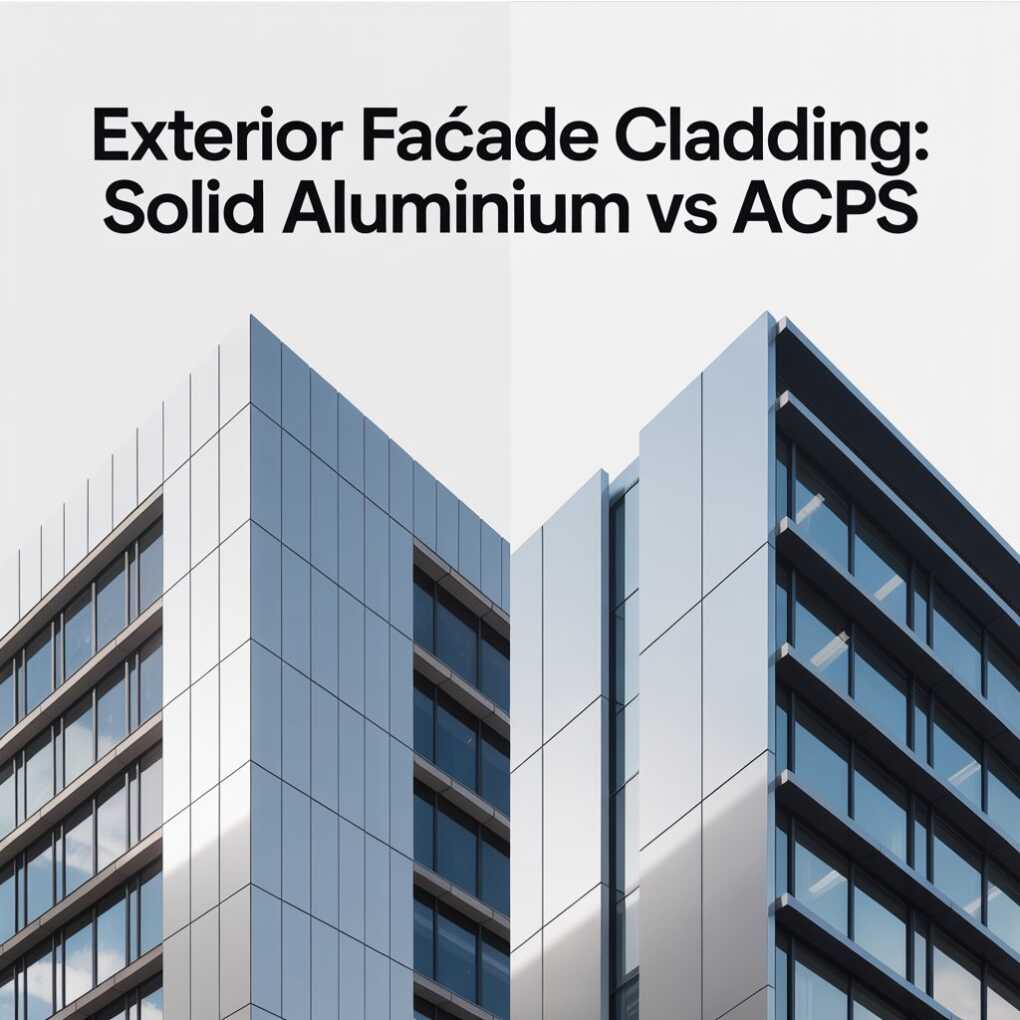
Which is the better choice?
Key Takeaways
- Modern aluminium cladding is non-combustible, and an initial choice must be made between solid aluminium and aluminium composite panels (ACPs).
- While solid aluminium may have a very slight edge in terms of rigid strength and impact resistance, the right ACP product is a better option in terms of design versatility, weight, handling, installation, sustainability, environmental impact, energy efficiency, cost-effectiveness, and maintenance.
- ALPOLIC™ ACPs are premium, world-class non-combustible cladding products with a range designed for residential/small-scale buildings, as well as DtS non-combustible aluminium cladding engineered for commercial, industrial, and high-rise applications.
Contemporary architectural design and construction place high demands on material choice in terms of longevity, functionality, and performance.
Aluminium is among the most popular materials currently used for exterior cladding, and both solid aluminium and aluminium composite panels (ACPs) have distinct properties that offer benefits. It’s important to understand the differences when deciding which is the right option for your project.
Solid Aluminium vs ACPs
Solid aluminium sheets are made entirely of metal and come in different thicknesses (gauges). They are strong, corrosion-resistant, durable, and can withstand extreme weather.
Lighter than steel, aluminium has a high strength-to-weight ratio, and it is easy to fabricate, handle, and install. It is also non-combustible. Solid aluminium cladding is relatively low-maintenance but does require periodic cleaning, coating reapplication, and polishing to maintain its appearance.
Aluminium Composite Panels or ACPs are made from two very thin sheets of solid aluminium bonded to each side of a core material. For non-combustible ACPs (the legislated industry standard in Australia since 2019), this is usually a mineral fibre core. These cladding panels are even lighter in weight than solid aluminium and easier to transport and install. They offer unrivalled design flexibility with a vast choice of colours, textures, patterns, and finishes.
Due to the non-aluminium core material, the thermal and acoustic insulation properties of the cladding are optimised, which boosts building energy efficiency. Manufacturing ACPs uses just a fraction of the energy it takes to craft solid aluminium cladding sheets – so ACPs are a more environmentally-friendly product. They are also a more budget-friendly option than solid aluminium cladding sheets. With the right product, no ongoing maintenance is required.
Which Option is Best?
ACPs perform better than solid aluminium in terms of:
- weight, handling, ease-of-installation
- design flexibility and customisation
- aesthetic appeal
- thermal insulation and energy efficiency
- acoustic insulation
- maintenance
- cost efficiency
- sustainability and environmental impact
DtS non-combustible aluminium cladding ACPs perform as well as solid aluminium in terms of fire safety performance.
Solid aluminium performs very slightly better than most ACP products in terms of overall structural strength, corrosion resistance, and impact resistance – but the right ACP product will also perform exceptionally well on these metrics.
Mitsubishi ALPOLIC™
Exclusively available in Australia at Network Architectural, Mitsubishi ALPOLIC™ offers two versatile ranges of premium non-combustible aluminium cladding made from mineral-core aluminium composite panels. The ALPOLIC™/fr line is designed for houses and buildings no taller than 18 metres, while ALPOLIC™ NC/A1 is a gold-standard DtS non-combustible aluminium cladding product designed for commercial, industrial, and high-rise applications.
ALPOLIC™ is manufactured from thin aluminium sheets that are bonded to a non-combustible mineral fibre core. The result is a thin, lightweight cladding system that is relatively quick and easy to install.
It is also fire safe. Particularly, ALPOLIC™NC/A1 is successfully tested to Euroclass A1 13501-1, which is the world’s strictest fire-rating test, as well as being compliant with Australia’s NCC building code.
This product line is also a very sustainable cladding option: ALPOLIC™ is 100% recyclable at the end of its life cycle. Made to last for many decades, it comes with a twenty-year full replacement warranty – without any maintenance clauses for cleaning or ongoing maintenance requirements.
Conclusion
Non-combustible aluminium cladding is objectively the most flexible, cost-effective, and overall high-performance façade cladding option available in Australia today. Choosing the right product from the most highly esteemed supplier will stand your project in good stead for decades to come.