
Your lawn should be your pride and joy. Not a source of frustration. But if you’ve noticed patchy grass, pooling water after rain, or that rock-hard feeling when you walk across your yard, you’re dealing with compacted soil. It’s one of the most common problems Charlotte homeowners face, and honestly? It’s killing your lawn from beneath the surface.
Compacted soil is like suffocation for grass roots. They can’t breathe, can’t access nutrients, and definitely can’t grow the way nature intended. The good news is there’s a proven solution that works wonders for Charlotte’s clay-heavy soil: core aeration. At Hyatt Landscaping, we’ve seen countless yards transform through professional lawn aeration Weddington services that break through that compacted layer and give your grass room to thrive. Let’s dig into why this matters for your property and how it can completely change your lawn’s health.
What Exactly Is Soil Compaction?
Think of compacted soil like a parking lot for your grass. When soil particles get pressed together too tightly, all those essential air pockets disappear. Water can’t penetrate. Roots can’t expand. Microorganisms can’t do their job.
Charlotte’s red clay soil makes this problem even worse. Clay naturally compacts easier than sandy or loamy soils. Add in regular foot traffic, kids playing, pets running around, and heavy equipment during construction? Your soil becomes dense and impenetrable. The grass tries to survive on the surface, but without healthy roots going deep, it’s fighting a losing battle.
Common signs your soil is compacted include:
- Water pooling on the surface instead of soaking in
- Grass that feels spongy or unnaturally firm underfoot
- Bare patches that won’t fill in no matter what you do
- Excessive thatch buildup (that brown, spongy layer between grass and soil)
- Yellowing grass despite regular watering
- Hard, crusty soil surface
The reality is that most Charlotte lawns experience some level of compaction. It’s not your fault—it’s just what happens over time. But ignoring it? That’ll cost you in the long run.
How Core Aeration Solves the Problem
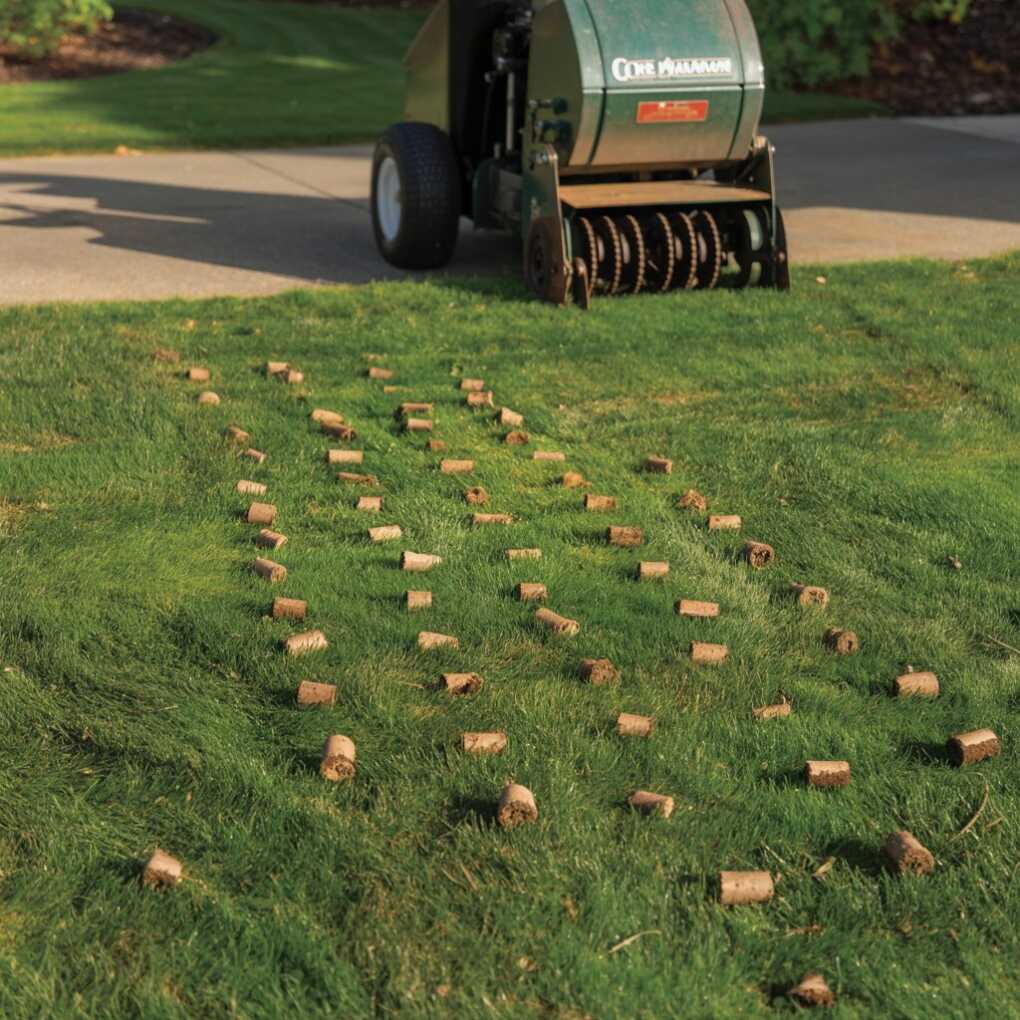
Core aeration isn’t just poking holes in your lawn. That’s a common misconception. True core aeration uses specialized equipment to physically remove small plugs of soil—typically 2-3 inches deep and about half an inch wide. These plugs get pulled out and left on the surface where they break down naturally.
What happens next is almost magical. Those channels allow air, water, and nutrients to reach the root zone immediately. Roots start growing into the newly opened spaces. The soil structure begins to improve. Your grass literally gets a fresh start.
Professional lawn care Charlotte NC companies use walk-behind or tow-behind aerators that create hundreds or even thousands of these holes across your property. The process takes less than a day for most residential yards, but the benefits last all season long.
“Core aeration is the single most impactful service we offer for struggling lawns. Clients see results within weeks—greener grass, better drainage, and healthier root systems.” — Professional Landscaper, Charlotte Metro Area
Pro Tip: Schedule aeration during your grass’s peak growing season. For Charlotte’s warm-season grasses like Bermuda and Zoysia, that means late spring through early summer. Cool-season grasses like fescue do best with fall aeration when temperatures cool down but the soil stays warm.
Top Benefits of Core Aeration for Charlotte Lawns
Improved Water Infiltration
Compacted soil forces water to run off rather than soak in. You’ll notice puddles forming after every rain, or your sprinkler water just sitting on top of the grass. This wastes water and leaves roots thirsty.
After aeration, water moves directly down to where it’s needed. No more waste. No more dry spots. The improvement is dramatic and immediate.
Enhanced Nutrient Uptake
Fertilizer sitting on compacted soil is basically useless. The nutrients can’t reach the roots. They either wash away with the next rain or sit on the surface doing nothing.
Aeration opens pathways for nutrients to penetrate deep. Every fertilizer application becomes more effective. You’ll get better results with less product, which saves money and benefits the environment.
Stronger Root Development
Roots need room to grow. Period. Compacted soil restricts root depth and density, creating weak grass that can’t handle stress.
Those aeration holes give roots space to expand downward and outward. Deeper roots mean better drought tolerance, improved disease resistance, and overall healthier grass. Your lawn becomes more resilient to Charlotte’s hot summers and occasional dry spells.
Reduced Thatch Accumulation
Thatch is that layer of dead grass, roots, and debris that builds up between living grass and soil. A thin layer is fine. Too much becomes a problem, blocking water and nutrients while harboring pests and disease.
Aeration helps break down existing thatch by increasing microbial activity in the soil. Those beneficial microorganisms need oxygen to work efficiently, and aeration delivers it. Over time, thatch levels decrease naturally without harsh dethatching that can damage your lawn.
When Should Charlotte Homeowners Aerate?
Timing matters. A lot.
For warm-season grasses common in Charlotte—Bermuda, Zoysia, and Centipede—aerate in late spring or early summer when they’re actively growing. This gives the grass time to recover and take advantage of those open channels before peak heat arrives.
Cool-season grasses like tall fescue need different timing. Early fall aeration works best, allowing the grass to strengthen before winter while avoiding the stress of summer heat.
| Grass Type | Best Aeration Time | Why This Timing Works |
|---|---|---|
| Bermuda | May – June | Peak growing season for fastest recovery |
| Zoysia | May – July | Active growth period ensures quick healing |
| Tall Fescue | September – October | Cool temperatures reduce stress, grass strengthens before winter |
| Centipede | Late May – June | Slower growing, needs warm soil for recovery |
Some lawns need aeration more than once per year. High-traffic areas, yards with heavy clay, or properties with severe compaction benefit from spring AND fall treatments. Your lawn care professional can assess your specific situation and recommend the right schedule.
DIY vs. Professional Aeration
Let’s be honest. You can rent an aerator from a home improvement store. Will it work? Maybe. Kind of.
Rental aerators are often lightweight machines that don’t pull plugs effectively from Charlotte’s dense clay soil. They bounce across hard ground without penetrating deep enough. The results are disappointing.
Professional equipment is heavier, more powerful, and designed specifically for tough soil conditions. The plugs come out clean and deep. Coverage is thorough and consistent. There’s no comparison in quality.
Plus, professionals know how to:
- Identify the right aeration pattern for your yard
- Adjust for slopes and drainage issues
- Avoid underground utilities and irrigation systems
- Combine aeration with overseeding or fertilization for maximum benefit
- Assess whether your soil needs additional amendments
The cost difference between DIY and professional service is minimal when you factor in rental fees, your time, and the likelihood of needing multiple passes to get adequate results. For most Charlotte homeowners, professional aeration is the smart choice.
Combining Aeration with Other Lawn Services
Aeration works beautifully on its own, but combining it with complementary services multiplies the benefits.
Overseeding immediately after aeration gives new grass seed direct contact with soil. Those aeration holes become perfect germination sites. Seed-to-soil contact improves dramatically compared to broadcasting seed on untreated ground. You’ll get thicker, fuller grass in weeks rather than months.
Fertilization right after aeration delivers nutrients exactly where they’re needed. The fertilizer falls into those holes and moves directly to the root zone. Nothing gets wasted on the surface. This is the most efficient time to fertilize all year.
Topdressing with compost adds organic matter to improve soil structure long-term. The aeration holes allow compost to work its way down into the soil profile rather than sitting on top. Over multiple seasons, this transforms clay soil into healthier, more balanced earth.
What to Expect After Aeration
Your yard will look weird at first. Those soil plugs sitting on the surface might make you nervous. Don’t be.
They break down within a week or two, especially if you get rain or run the sprinkler. Mowing helps too. The plugs crumble and work back into the lawn, actually adding beneficial microorganisms and organic matter.
Within 2-3 weeks, you’ll notice differences:
- Grass looks greener
- Bare spots start filling in
- Water soaks in faster
- The lawn feels different underfoot—more alive
By 4-6 weeks, the transformation is obvious. Thicker grass. Better color. Improved resilience. Your neighbors will ask what you did.
Maintaining Results Year-Round
Aeration isn’t a one-time fix. It’s part of ongoing lawn health.
Between aeration treatments, focus on practices that minimize future compaction:
- Vary traffic patterns across the lawn
- Avoid walking on grass when soil is wet and soft
- Add mulched paths in high-traffic areas
- Keep soil organic matter levels up through regular topdressing
- Water deeply but infrequently to encourage deep root growth
Pro Tip: Test your soil every 2-3 years to track improvements in structure, pH, and nutrient levels. This data helps fine-tune your aeration schedule and other lawn care practices.
The Charlotte Advantage
Charlotte’s climate actually makes aeration even more beneficial than in many other regions. Our hot, humid summers stress lawns significantly. Compacted soil amplifies that stress.
By aerating regularly, you’re giving your grass the best possible foundation to handle heat, humidity, occasional drought, and disease pressure. It’s preventive care that pays dividends all season long.
Local soil conditions—that notorious red clay—respond incredibly well to professional aeration. The improvement in drainage alone is worth the investment for most properties.
Making the Investment
Core aeration is one of the most cost-effective lawn improvements available. For a few hundred dollars (depending on yard size), you get benefits that last months and contribute to long-term lawn health.
Compare that to constantly reseeding bare patches, over-fertilizing to compensate for poor nutrient uptake, or worst case—replacing dead lawn sections. Prevention through aeration saves money and frustration.
Professional services typically charge by square footage or offer package deals that include aeration with fertilization and overseeding. Get quotes from reputable local companies that understand Charlotte soil and grass types. The right partner makes all the difference.
Your lawn deserves better than struggling through compacted soil. Core aeration breaks through that barrier, opening up possibilities for truly healthy grass that thrives in Charlotte’s conditions. Whether you’re dealing with persistent bare spots, drainage issues, or just want to take your lawn to the next level, aeration delivers results you can see and feel. Don’t let compacted soil hold your property back another season. The solution is simpler than you think, and the transformation is absolutely worth it.