
You’ve probably spent at least one grey afternoon staring out at your garden, tea in hand, thinking: ‘I really should do something with that space.’
Maybe the patio is looking worse for wear or maybe you’ve just been watching too many renovation shows. Whatever the reason, British gardens are having a proper moment, and it’s been a long time coming.
From London gardeners reinventing compact urban plots to homeowners finally treating their outdoor spaces as an extension of the home, the way we use gardens is changing fast. Here’s what’s actually trending out there.
The Rise of the Sophisticated Outdoor Kitchen
Gone are the days when outdoor cooking meant charcoal-stained fingers and a prayer that the sausages weren’t raw in the middle. Modern British gardens are now sporting full culinary setups that would put a professional chef to shame.
We are seeing integrated stone benchtops, stainless steel cabinetry, and wood-fired pizza ovens becoming the new standard. It’s no longer about a portable grill; it’s about a permanent footprint for gastronomic glory.
landscape designers are increasingly being asked to design spaces that include plumbed sinks and outdoor fridges. What was once considered a luxury is quickly becoming a mainstream expectation in garden renovations across the UK.
Structural Planting Is Taking Over From Manicured Lawns
The perfectly striped lawn is losing its iron grip on the British garden aesthetic.
Structural planting, using bold, architectural plants to create shape, texture, and year-round interest, is the new standard. Think ornamental grasses, sculptural shrubs, and layered borders that look intentional in January just as much as July.
This means the focus shifts from constant mowing and seasonal bedding plants to thoughtfully arranged layers of grasses, shrubs, and perennials that give the garden form throughout the year.
Low-Maintenance Landscaping Is a Priority
Beautiful gardens are great, but not when they turn your weekends into an endless cycle of mowing, trimming, and weeding.
Homeowners are increasingly asking professional landscapers for solutions that look intentional without requiring constant upkeep. The demand is real, and the options have genuinely improved.
The most popular low-maintenance features right now include:
- Permeable paving that improves drainage naturally while reducing the need for complex infrastructure;
- Drought-tolerant planting designed to thrive with minimal watering or intervention;
- Gravel and mulch ground covers that help suppress weeds while adding texture and visual contrast;
- Native plant species that integrate with the local ecosystem and adapt easily to regional conditions;
- Artificial grass in high-traffic areas can provide a consistently green surface without regular mowing.
Professional landscapers and local gardeners across the UK say this shift toward low-maintenance design now appears in almost every project brief.
It’s especially noticeable in London, where compact plots need to work hard and homeowners rarely have time for constant upkeep.
Zoned Living Areas Create Multi-Functional Spaces
The ‘one-size-fits-all’ lawn is officially a thing of the past. We are now seeing gardens carved into distinct rooms using clever planting and structural screening.
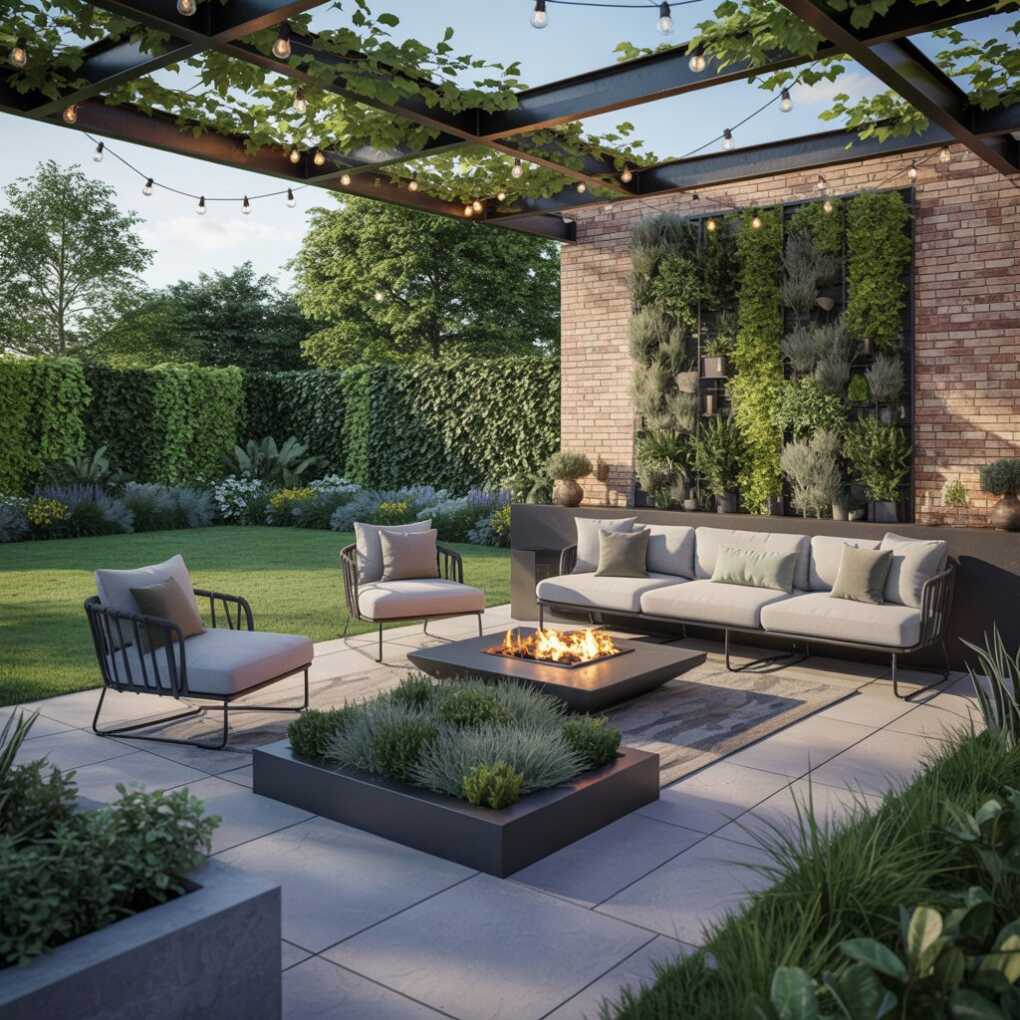
You might have a sunken fire pit area for evening drinks, a secluded nook for morning yoga, or a dedicated dining or lounge space. This modular layout makes even the smallest Victorian terrace feel expansive and purposeful.
By defining these zones, homeowners will find that they actually want to use their outdoor space far more frequently.
Covered and Heated Spaces Make Gardens Usable Year-Round
The British climate has never been particularly cooperative, which is why modern garden design is now focusing on making outdoor spaces usable in all kinds of weather.
Pergolas, gazebos, and architectural canopies are increasingly being designed to handle real weather, not just provide shade on sunny days.
Paired with outdoor heaters, fire pits, or even outdoor fireplaces, they can extend the usable season from a few warm weeks into something approaching year-round.
Smart landscaping professionals across the UK have become very good at designing spaces that feel genuinely comfortable even when the sky has other ideas.
Sustainability Is Shaping Every Decision
This isn’t a trend so much as a fundamental shift in how people design their gardens. Sustainability is now baked into the brief from the start.
Rainwater harvesting systems, composting setups, and wildlife-friendly planting have moved from niche to expected. So, if you’re planning a redesign, sustainability isn’t something to bolt on at the end but a starting point.
Peat-free compost is now the default. Rewilding is also gaining traction, with many gardens now including small sections intentionally left to grow more naturally. This shift is also visible in the growing focus on pollinator-friendly planting in urban gardens.
Lighting Is Being Treated as a Design Element
Outdoor lighting used to be an afterthought—a spike light shoved into the lawn or a security floodlight that blazed on at 2 am when a fox walked past.
That has now changed dramatically. Today, lighting is planned alongside the planting and hard landscaping, rather than being added at the end of the project.
As a result, warm, layered lighting schemes create atmosphere and invite you to enjoy your garden long after daylight fades. At the same time, solar-powered options have improved significantly, meaning sustainability and good design no longer have to compete.
The real benefit becomes clear on evenings when you step outside and take it all in! A well-lit garden on a mild autumn night can quickly become one of life’s underrated pleasures.
Wellness Features Are Finding Their Way Outdoors
Cold plunge pools, outdoor showers, saunas, and yoga platforms: these are no longer the exclusive domain of luxury retreats.
You might imagine starting your morning with a quiet stretch on a garden yoga deck, rinsing off under an outdoor shower after a workout, or ending the day beside a warm sauna on a cool evening.
The connection between outdoor space and mental wellbeing has been well documented, and more gardens are now being designed with that experience in mind.
In practice, this means you might begin to see your garden less as something decorative and more as a place to pause, recharge, and step away from the pace of daily life.
Conclusion
Congratulations on making it to the end of this horticultural deep dive without getting any dirt under your fingernails!
The best gardens aren’t the biggest or the most expensive; they’re the ones people actually bring to life. There’s never been more inspiration, more options, or more good reasons to take that first step. Yours could be next, and, trust us, it’s going to look great.