You want a boho pendant light that feels relaxed, warm, and a little bit special. You do not want one that looks pretty in a product photo but feels flimsy, hangs awkwardly, throws harsh light, or starts showing wear after a few months. That is the real buying problem, isn’t it? A quality boho pendant light should do three jobs at once: look good in daylight, glow beautifully at night, and hold up to everyday life.
Boho style is generally associated with a free-spirited, layered look that favors natural textures, handmade character, and a less rigid feel, which is why materials like rattan, bamboo, jute, linen, wood beads, and woven grass show up so often in this category. That broad style background matters because it tells you what to judge: not just color and shape, but texture, craftsmanship, and how softly the light is filtered through natural material. [Wikipedia, accessed 2026]
There is another practical layer here. A pendant is not just decor. It is an electrical product that hangs overhead, often over a dining table, kitchen island, bedside corner, or entry. So the smartest way to shop is to balance the cozy look you want with the safety, brightness, cleanability, and sizing rules that keep the fixture useful for years. The U.S. Department of Energy says light quality matters as much as quantity, and it specifically separates lighting into ambient, task, and accent uses, which is a great way to think about pendants in real homes. [U.S. Department of Energy, 2026, updated last week]
Key takeaway: when you judge a boho pendant light, you should look at 9 things: material quality, weave and finish, safety certification, size, hanging height, light softness, bulb compatibility, room rating, and maintenance. Get those right, and even a simple pendant can make your room feel calmer, warmer, and far more finished.
Why quality matters more with boho lighting
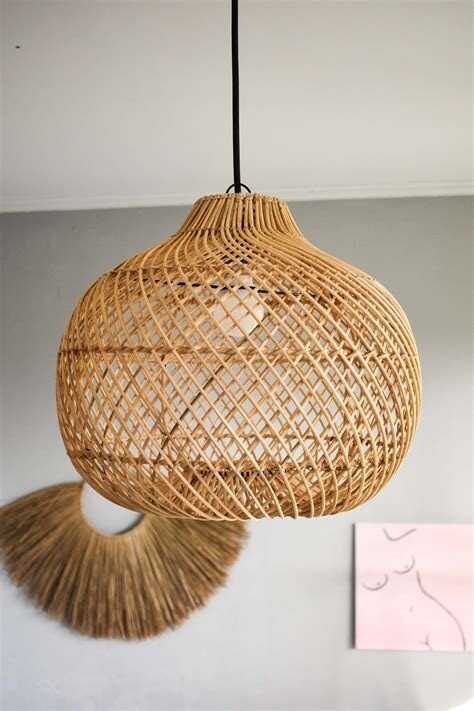
Boho pendant lights often rely on visible texture. That is both their charm and their weak point. With a painted metal shade, small flaws may disappear into the finish. With rattan or rope, flaws are easier to spot. Loose strands, uneven dye, splintering, thin framing, crooked weaving, and cheap plastic parts stand out fast. In other words, boho style is forgiving in mood, but unforgiving in construction.
Quality also affects the kind of light you live with. Thin, dry, low-grade natural fibers can create messy shadows or discolor faster when exposed to heat. Better-made shades usually diffuse light more evenly, keep their shape better, and look more intentional from every angle. That matters when the pendant sits at eye level across the room and becomes one of the first things people notice.
On top of that, the bulb and fixture combination changes your electricity use and your day-to-day comfort. ENERGY STAR says certified LED lighting products can use up to 90% less energy than incandescent lighting, and its consumer material commonly notes much longer life spans as well. The FTC’s current consumer guidance also reminds shoppers to focus on lumens for brightness rather than watts, because watts tell you energy use, not how bright the bulb feels. [ENERGY STAR, accessed 2026; FTC Consumer Advice, published 2026]
| What you are judging | Good sign | Warning sign | Why it matters |
|---|---|---|---|
| Material | Dense, even natural fibers | Brittle, fuzzy, cracked strands | Better durability and cleaner appearance |
| Frame | Rigid metal or solid wood support | Flexing ring or warped shade | Prevents sagging and uneven hanging |
| Electrical parts | UL/ETL-listed style certification details shown | No certification details | Safer overhead use |
| Light output | Lumens and bulb type clearly stated | Only “warm glow” marketing words | Helps you predict actual brightness |
1) Start with the material: natural should still feel sturdy
The first thing you should check is the main shade material. In boho lighting, the most common choices are rattan, bamboo, seagrass, jute, linen, wood beads, paper rope, and blends that mix natural texture with hidden metal support. A quality piece does not need to be expensive, but it should feel deliberate. The fibers should look evenly colored, not patchy. The edges should feel finished, not scratchy or frayed. And if the product uses a hidden frame, that frame should keep the shape round, balanced, and stable.
A quick everyday test helps here: imagine wiping it once a week for a year. Would it still look good? If the answer feels doubtful, keep scrolling. This matters a lot in real homes. In a dining room, cooking residue travels farther than people expect. In an entryway, dust collects quickly. In a bedroom, a shade that traps dust but cannot be cleaned easily becomes annoying fast.
Look for: handwoven rattan with a firm frame, lined linen that hides glue marks, wood beads that feel smooth, and metal hardware that does not look painted too thinly.
Avoid: cracked reeds, loose knots, sharp cut ends, visible hot glue, plastic “rattan look” strands that shine too much, and product photos that never show the top opening or the inside of the shade.
2) Inspect the weave, finish, and small details
This is where many people get fooled. The overall shape may look lovely, but the closer details tell you whether the light will age well. Quality weave work is usually consistent. The spacing may not be perfectly machine-uniform, but it should look intentional. That slightly handmade variation is part of the charm. What you do not want is random gaps, sagging sections, or misaligned lines that make the whole pendant look lopsided once installed.
Pay special attention to the top cap, canopy, chain, downrod, or cord cover. Cheap hardware can make a good shade look unfinished. If the shade is soft and earthy but the canopy is thin, glossy, and poorly painted, the entire fixture can feel off. You notice that mismatch every single day.
Think of it like buying a woven bag. The texture draws you in first, but the stitching and handles decide whether it lasts. Pendant lights work the same way.
3) Check for safety certification before you fall in love with the look
This step is not glamorous, but it is essential. A pendant light hangs overhead and connects to your home’s electrical system. UL Solutions says lighting products can be tested to standards such as UL 1598 for luminaires and UL 8750 for LED equipment used in lighting products. In plain language, a listed product has gone through recognized safety evaluation rather than relying only on the seller’s promise. [UL Solutions, published 2026]
You should look for a clear listing reference in the product details, such as UL Listed, ETL Listed, or another recognized testing mark that is actually specified in the product documentation. Be careful here: some listings mention “designed to meet standards” without saying the actual product is listed. That is weaker. You want the fixture itself to have credible safety documentation.
The U.S. Consumer Product Safety Commission also warns consumers to use lights tested for safety by an independent testing laboratory and to watch for damaged wires, loose connections, and cracked components. While one of its recent pages focuses on seasonal decorative lighting, the practical lesson applies neatly to home lighting purchases too: visible electrical weakness is never a cosmetic issue; it is a safety issue. [CPSC, accessed 2026]
Common confusion #1: “It is only decorative, so safety details do not matter much.” They matter a lot because decorative ceiling lights still run electricity over your head.
Common confusion #2: “If reviews say it works, that is enough.” Reviews can tell you about style and shipping. They are much weaker on electrical safety.
Common confusion #3: “If I use an LED bulb, the fixture itself does not matter.” The bulb matters, but the socket, wiring, canopy, heat tolerance, and installation hardware matter too.
4) Size the pendant to the room and the furniture under it
This is the mistake that most often makes a boho pendant look cheap even when it is not. A beautiful pendant that is too small can look like an afterthought. Too large, and it starts crowding the room, blocking sightlines, or dominating the table in a heavy way.
This Old House gives a useful rule for dining room pendants: hang the fixture about 30 to 36 inches above the table surface, and size it at roughly one-half to two-thirds of the table width. That simple rule is practical because it balances scale and visibility. [This Old House, accessed 2026]
Formula 1: Recommended pendant width over a table
Recommended fixture width = table width × 0.5 to 0.67
Plain-language example: if your dining table is 42 inches wide, a pendant around 21 to 28 inches wide usually lands in the comfortable range. That does not mean every room must follow the same number exactly, but it gives you a smart starting point.
| Typical setup | Easy size guide | Best use | What happens if too small |
|---|---|---|---|
| Small breakfast table | 12–18 in shade | Cozy nook, apartment dining | Looks lost above the table |
| Standard dining table | 21–28 in shade | Most 4-seat tables | Light spread feels weak |
| Kitchen island | 2–3 smaller pendants | Task + style balance | Uneven lighting zones |
| Entryway or corner | Based on open floor area | Ambient statement light | Visual impact disappears |
Here is a helpful real-life scenario. If you live in a small apartment and want a relaxed boho look above a round dining table, you may be tempted to buy a tiny woven pendant because it looks “delicate.” But once installed, it can look underpowered and timid. In that case, a slightly larger shade with an open weave often works better because it feels airy without disappearing.
5) Get the hanging height right so it feels intentional, not awkward
Even a great pendant can look wrong when it hangs too high or too low. Too high, and it loses intimacy. Too low, and it blocks faces, crowds headspace, or feels visually heavy. Over a dining table, that 30 to 36 inch rule from table surface to bottom of fixture is a very good baseline. In open circulation areas, you usually want much more clearance so people can move under it comfortably.
This is one of those details that changes mood immediately. A lower pendant feels warmer and more intimate because the light stays visually tied to the table. A higher pendant feels more general and less grounded. There is no mystery here. The effect is simple cause and effect: when the light source sits closer to the activity area, the scene feels more focused.
Mistake story: one common living-room mistake is buying a gorgeous woven pendant for a reading corner, then hanging it as high as a central ceiling light. The result looks disconnected. Bringing it lower instantly makes the corner feel deliberate.
6) Judge the quality of light, not just the look of the shade
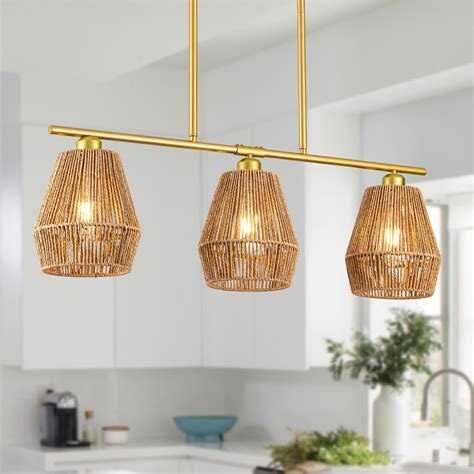
This is huge. A pendant can be visually stunning and still give you bad light. The U.S. Federal Trade Commission tells shoppers to pay attention to lumens for brightness, and the Department of Energy explains that CRI, or Color Rendering Index, measures how naturally colors appear under a light source. DOE says a CRI of 80 or higher is acceptable for most indoor residential use. [FTC Consumer Advice, 2026; U.S. DOE, 2026]
For a boho pendant, you will usually want a warm, flattering, relaxed feel rather than icy brightness. That often means aiming for warm white bulbs around 2700K to 3000K for living, dining, and bedroom spaces. If the fixture is used where you prep food or read often, you may want enough brightness for function, not just mood. A pendant over a kitchen island that looks dreamy but leaves chopping boards dim will frustrate you quickly.
Good practical targets for many homes:
- Color temperature: 2700K to 3000K for a warm boho feel
- CRI: 80+ minimum; higher is nicer where color matters
- Dimming: very helpful if the same table is used for meals, work, and evening winding down
Everyday scenario 1: In a dining room, warm light makes food and skin tones look friendlier. A cold bulb can make the same woven pendant feel less cozy and more showroom-like.
Everyday scenario 2: In a bedroom corner, a soft-shaded pendant with a dimmable warm LED can replace a bulky floor lamp and free up space.
Everyday scenario 3: In a small entryway, a semi-open woven pendant gives character without making the area feel dark, as long as the lumen level is high enough.
7) Make sure the fixture and bulb actually work together
A quality pendant should tell you clearly what bulb base it uses, the maximum wattage, whether bulbs are included, and whether it works with dimmers. You should also check whether the shade is open or enclosed. An open weave can create beautiful patterned shadows, but if the bulb is fully exposed, a very bright bulb may cause glare. A lined or double-layered shade usually softens the look more.
ENERGY STAR and DOE materials both reinforce the practical value of LED choices for efficiency and longevity, especially in fixtures used for more than a couple of hours per day. DOE also recommends using energy-efficient fixtures and controls such as dimmers, timers, or connected systems when appropriate. [ENERGY STAR, accessed 2026; U.S. DOE, updated 2026]
Formula 2: Estimated yearly lighting cost
Yearly cost = (bulb watts × hours per day × 365 ÷ 1000) × electricity rate
Plain-language example: if you use a 10-watt LED in your pendant for 5 hours a day and your electricity rate is $0.20 per kWh, the rough yearly cost is (10 × 5 × 365 ÷ 1000) × 0.20 = about $3.65 per year. That is why a good LED-ready pendant is so practical for rooms you use every day.
| Bulb choice | Typical feel | Best for | Yearly cost example* |
|---|---|---|---|
| 8W LED, 2700K | Warm, soft, relaxed | Bedroom, dining | $2.92 |
| 10W LED, 3000K | Warm but brighter | Island, breakfast area | $3.65 |
| 15W LED, 3000K | Brighter task support | Work-heavy zones | $5.48 |
*Example assumes 5 hours of use per day and $0.20/kWh.
8) Check the room rating: dry, damp, or wet really matters
This is one of the most overlooked details. A pendant in a dry dining room does not face the same conditions as one near a steamy bathroom area, humid kitchen zone, or covered outdoor space. If you are using a boho pendant where moisture or steam is common, you should check whether it is rated for that environment. Natural materials can look wonderful, but humidity can change how some fibers age.
If you place the wrong fixture in the wrong spot, the failure pattern is predictable: faster wear, warped material, finish damage, and sometimes safety problems. The reason is simple. Moisture changes both materials and electrical risk. That is why product rating is not a boring specification line; it is a practical buying filter.
Mistake story: a woven pendant above a kitchen sink may look amazing online, but if the listing only supports dry locations, it is the wrong choice for a splash-prone zone.
9) Think about cleaning, dust, and long-term maintenance
Boho lights are beautiful partly because they have texture. Texture also catches dust. So before you buy, ask yourself how easy it will be to clean. A wide open weave may be easier to dust gently with a soft brush or vacuum attachment. A very intricate beaded piece may take longer. A pale linen drum can look calm and beautiful, but it may show kitchen grease or hallway dust more quickly than you expect.
This is not a tiny issue. A fixture that takes 20 minutes to clean every week often ends up getting ignored. Then it stops looking like a stylish centerpiece and starts looking tired. Practical design works because it stays livable, not because it is perfect on day one.
Fast maintenance test: can you explain in one sentence how you would clean it? If yes, good. If not, pause.
Three relatable buyer mistakes to avoid
Buying only for style: You fall for the woven shape, ignore lumen output, and end up with a pretty but gloomy table. This fails because appearance was judged without function.
Ignoring installation details: You love the shade, then discover the cord is too short or the canopy does not suit your sloped ceiling. This fails because the product looked right in isolation but not in your actual room.
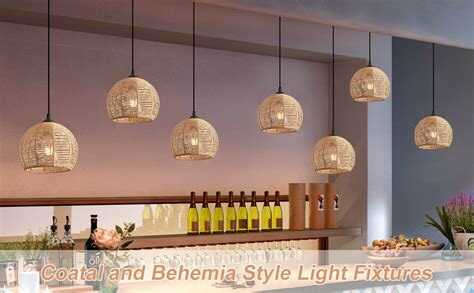
Choosing exposed bulbs that glare: You pick a super-open shade and a very bright bulb, then feel annoyed every evening because the bulb shines directly in your eyes. This fails because shade structure and bulb intensity were not matched.
How different shoppers should adjust their choice
If you rent: prioritize easy installation, lighter weight, and classic warm finishes that can move with you. A plug-in style pendant or simple hardwired model may be easier to live with than a very heavy statement piece.
If you have kids or pets: lean toward sturdy frames, simpler shapes, and easy-to-clean materials. Intricate beads near rough play zones can become a stress point.
If you want a “quiet” room: choose softer materials, gentler weave patterns, and warmer bulbs. A highly patterned open weave creates more dramatic shadow play, which can be lovely but busier.
If you want the pendant to be the star: size up slightly within reason, keep surrounding decor calmer, and make sure the quality of weaving and hardware is strong enough for close visual attention.
Two simple examples that show why these rules work
Example from dining: a 24-inch rattan pendant over a 42-inch dining table fits the general width rule, hangs 32 inches above the surface, uses a dimmable warm LED, and has a listed fixture body. The result usually feels balanced because the size, height, and light quality all support the way you actually use the table.
Example from bedroom: a smaller linen-and-rattan pendant near a bedside corner with a soft 2700K bulb works better than a harsh exposed bulb because the lower glare helps the space feel restful. The mechanism is simple: lower visual harshness creates a calmer atmosphere.
6 practical external links that are actually worth opening
U.S. Department of Energy’s lighting principles guide explains CRI, ambient light, task light, and other core terms in plain language so you can judge brightness and color quality without guesswork.
FTC’s light bulb shopping guide helps you understand lumens, wattage, estimated energy cost, and packaging labels so you can read bulb specs like a smarter shopper.
ENERGY STAR’s LED lighting page shows why LED fixtures and bulbs are practical for daily use, including efficiency and long-life benefits that matter when your pendant is on every evening.
UL Solutions’ lighting safety certification page shows what recognized safety testing covers and why listed lighting products are worth prioritizing for overhead fixtures.
This Old House’s pendant light guide gives easy sizing and hanging-height guidance, especially helpful when you are trying to avoid a too-small or too-low fixture.
Wikipedia’s overview of bohemian style gives quick context for the relaxed, layered design language behind boho decor, useful if you are trying to match your pendant to the rest of the room.
Final checklist before you buy
- Material: natural-looking, sturdy, and not brittle
- Weave: consistent and intentional, not messy
- Hardware: canopy, cord, and socket look solid
- Safety: recognized listing details clearly provided
- Size: matched to table or room scale
- Height: appropriate for sightlines and use
- Bulb specs: lumens, color temperature, and dimming all clear
- Room rating: dry or damp suitability checked
- Cleaning: easy enough for real life
Conclusion
So, what should you look for in a quality boho pendant light? You should look past the pretty woven silhouette and judge the fixture like something you will actually live with. The best boho pendant lights combine natural texture, dependable construction, safe electrical standards, flattering light, sensible sizing, and easy upkeep. That is what turns a trendy purchase into a lasting part of your home.
If you remember just three things, make them these: check the craftsmanship, check the specs, and check the scale. A boho pendant should feel easy, warm, and welcoming. It should not make you fight glare, regret the size, or worry about the hardware. When the material is right, the proportions make sense, and the light feels good on your table or in your room, you can tell. The whole space relaxes a little. And that is exactly what a good boho pendant light is supposed to do.
Sources referenced in the article include current consumer and technical guidance accessed in March 2026 from the U.S. Department of Energy, Federal Trade Commission, ENERGY STAR, UL Solutions, CPSC, This Old House, and Wikipedia.