
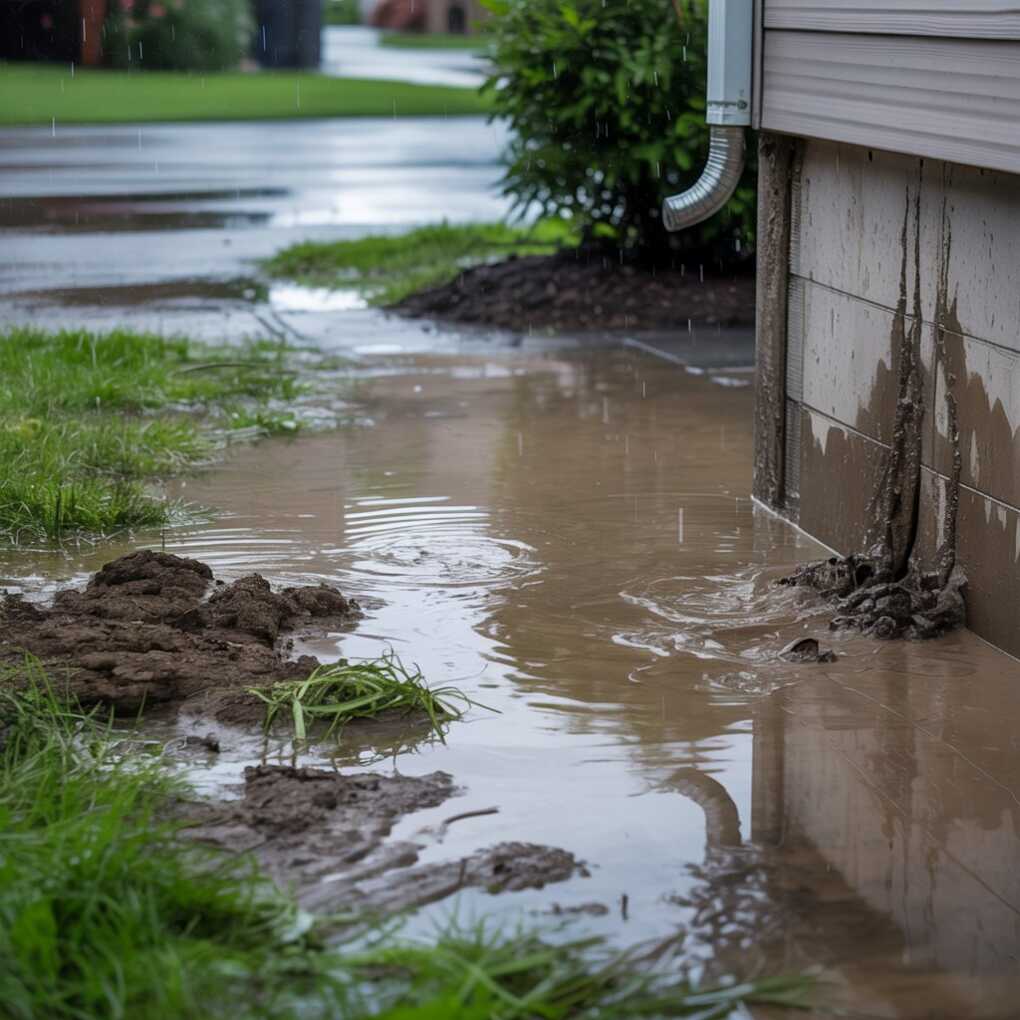
Rain lashes down. Thunder rumbles. You watch from your window as puddles grow. Then grow more. Suddenly your backyard looks like a mini-lake inches from your house. Yikes. That soggy moat isn’t just annoying. It’s screaming danger. Water pooling near your foundation? Yeah that’s bad news bears. Basements flood. Cracks creep up walls. Foundations shift. Costs? Sky-high repairs. But here’s the kicker: most homeowners miss the obvious fixes. They panic. Call expensive contractors. When actually? You can diagnose 80% of this yourself. No fancy tools. Just eyes and hustle. I’ve seen too many folks in Hamilton, Pittsburgh, or Moon Township drown in bills because they skipped the simple checks. So let’s fix that today. Grab your boots. We’re diving into why water camps out near your foundation—and exactly what you should inspect first. No jargon. Just actionable truth.
The Sneaky Culprit Behind That Water Pool
Your yard needs to slide water away from your house. Period. Think of it like a gentle slide. But what if that slide points toward your foundation? Oh boy. That’s poor grading. And it’s public enemy #1 for foundation water. See most homes need at least a 5% slope (that’s 6 inches of drop over 10 feet). But construction crews sometimes get lazy. Or soil settles over time. Creating a death trap. Water flows downhill—duh—but when downhill means “toward your basement”? Disaster waits. I once visited a house in Ancaster where the lawn looked perfect. Until rain. Suddenly water crawled right up to the basement window wells. Turns out the grading was dead flat. Worst part? Homeowner had no idea. It looked fine when dry.
Clay soil? Double trouble. Hamilton and Pittsburgh sit on thick clay. Super dense. Barely absorbs water. Mix that with bad grading? Water literally can’t escape. It pools. Sits. Soaks your foundation like a sponge. One client in Greenville showed me photos. After heavy rain his yard held water for three days. Foundation walls were weeping moisture. All because his yard sloped 2% toward the house. Not much. But enough to drown his basement slowly. Check this yourself: After rain, walk your property line. Stand near the foundation. Walk outward 10 feet. Is your head higher than your feet? Good. If not? You’ve got grading grief. Fix it? Regrade soil ASAP. Add swales. Or install French drains. But first—diagnose! Don’t assume. Measure.
Downspouts: Are Yours Playing the Villain?
Roof gutters catch gallons of water. A single 1,000 sq ft roof sheds 600 gallons per inch of rain. Insane right? But where does all that water GO? If your downspouts dump it 2 feet from your foundation? You’re basically hosing your basement wall. Every storm. Seriously. Picture this: Heavy rain hits. Gutters fill. Downspout spits water right next to your house. Soil saturates instantly. Hydrostatic pressure builds. Crack forms. Leak happens. It’s physics not magic. And downspouts shorter than 6 feet? Basically useless. They’re just redirecting water closer to trouble.
Now—clogged gutters? Oh that’s the silent killer. Leaves. Twigs. Debris. Block that flow. Water backs up. Overflows. Cascades down your siding. Hits the ground next to your foundation. Worse—it erodes soil unevenly. Creates low spots that trap MORE water next time. One homeowner in Moon Township showed me her flooded crawlspace. Gutters looked clean. But inside? Packed solid with pine needles. “I never thought to check up there,” she admitted. Classic. Pro tip: Clean gutters every 3 months. Especially before spring storms. Feeling lazy? Hire a pro. Looking for who does gutter cleaning near Moon Township? Pittsburgh Power Wash handles it fast and cheap. Trust me. Clogged gutters cause 30% of preventable foundation leaks. Don’t wing it.
“I thought my drains were fine until water seeped into my basement during a storm. Turned out one downspout was buried under mulch. Lesson learned: check ALL discharges after rain.” — Dave R., Hamilton homeowner
Soil Secrets: Why Your Ground Won’t Drink the Water
Soil compaction is the invisible thief. You walk on your lawn. Kids play. Heavy equipment compacts soil during construction. Result? Dense, hard-packed dirt. Water can’t soak in. It just… sits. Pools. Especially with clay-heavy soil like Pittsburgh’s famous red clay. Or Toronto’s stubborn黏土. Compacted clay becomes a waterproof barrier. Rain hits it—and runs sideways toward your house. No absorption. Zip. Nada. I tested this once with a friend. Dug two holes in his yard. One near the foundation (compacted). One in the back (loose soil). Poured equal water. Front hole still held water after 2 hours. Back hole? Gone in 10 minutes. That’s your foundation’s nightmare. Quick Soil Test: Try This Tomorrow (click to expand)
Grab a screwdriver after rain. Push it into soil 1 foot from your foundation. Can you drive it in 6 inches easily? Great. Struggles after 2 inches? Compacted. Needs help. Now try 10 feet away. Big difference? Uh oh. Water’s pooling near house because soil won’t drink it. Fix: Aerate lawn. Break up compaction. Or till compost into topsoil. For quick relief? Dig a shallow trench (swale) to guide water away. Simple. Cheap. Works wonders.
Also—low spots kill. Soil settles over time. Creates little bowls where water collects. You might not even see them until they’re full. Walk your yard post-rain. Spot puddles? That’s your clue. Fill those dips with topsoil. Slope gently away from house. Done. But ignore it? Water softens soil under your foundation. Causes uneven settling. Cracks appear. Costly repairs follow. Don’t wait for cracks. Fix pooling now.
DIY Drainage Diagnosis: 5 Checks You Can Do Today
Stop guessing. Start checking. Here’s exactly what to inspect after your next heavy rain. Do this before calling contractors (unless water’s already in your basement—then call pros ASAP).
🔍 The “Puddle Walk” Inspection
Wait 30 mins after rain stops. Walk around your foundation. Note where water pools. Critical: Measure how far pools sit from your house. Closer than 3 feet? Red flag. Draw rough map of puddles. Take photos. This tells you exactly where to focus fixes. No measuring tape needed—count sidewalk squares. One square ≈ 3 feet.
📏 The Slope Test
Grab a string, two stakes, and a level. Hammer stake near foundation (A). Hammer second stake 10 feet out (B). Tie string between them. Level it. Measure from ground to string at both points. Difference should be ≥ 6 inches (5% slope). Less? Or negative? Grading failure. Simple as that.
💧 Downspout Discharge Check
Stand outside during rain. Watch where downspouts dump water. Is it:
- Within 3 feet of foundation? Bad.
- Flowing toward house? Worse.
- Clogged with debris? Disaster.
Extend them now. Temp fix: Buy $10 plastic extensions. Real fix: Buried drainage pipes. But extensions buy time.
🌧️ Gutter Overflow Scan
Look for stains on siding under gutters. Brown streaks? That’s overflow. Means gutters are clogged or too small. Check corners especially—they trap debris. Scoop out gunk with gloved hands. Or flush with hose. Pro tip: Install gutter guards after cleaning. Guards alone won’t fix built-up muck.
🧱 Foundation Moisture Hunt
Wipe basement walls with white cloth. Dark stains? Water intrusion. Smell musty? Mold forming. Check mortar joints too—crumbling = water damage. No basement? Inspect crawl space. Damp soil? Unacceptable. Time for drainage fixes.
DIY Fix Priority Cheat Sheet (click to expand)
Table shows common issues ranked by urgency + quick solutions:
| Issue | Danger Level | Quick DIY Fix | When to Call Pros |
|---|---|---|---|
| Downspout dumping <3ft from foundation | ⚠️⚠️⚠️ | Add $10 extensions | If pooling persists after 2 storms |
| Clogged gutters causing overflow | ⚠️⚠️⚠️ | Scoop debris + flush weekly | If roof damage suspected |
| Yard grading <2% away from house | ⚠️⚠️⚠️⚠️ | Reshape soil with shovel | If cracks exist in foundation |
| Compacted clay soil near foundation | ⚠️⚠️ | Aerate + add compost | If pooling >24hrs after rain |
| Standing water >3 days post-rain | ⚠️⚠️⚠️⚠️⚠️ | Dig swale ASAP | Call immediately |
Source: Square Leaf Landscaping, Morales Landscaping
Pro Tip: The $5 Hose Test
Here’s a trick contractors hate (okay, they don’t hate it—most just forget to tell you). Grab a garden hose. Turn it on low near your foundation. Simulate rain. Watch where water flows. Does it:
- Sheet smoothly away? 👍
- Pool within 1 minute? 👎
- Find cracks to seep through? 😱
This takes 5 minutes. Costs nothing. Reveals exactly where grading fails. Do it before real rain hits. Better yet—do it after DIY fixes to confirm they work. I’ve saved clients $3k in unnecessary French drains with this test. Seriously. Try it.
Don’t Ignore the Slow Creep
Water pooling seems “minor” until it’s not. That damp spot. The tiny crack. The musty smell. They whisper. Then they scream. Frost heave in winter. Soil swelling in summer. All from poor drainage. And here’s the cold truth: Once foundation damage starts? Stopping it costs 5x more than prevention. One Pittsburgh homeowner ignored pooling for years. “It always dries up,” he said. Then a single storm flooded his basement. Foundation shifted 3 inches. Repair bill? $28,000. Gutters cost $200. Grading? $800. Do the math.
Check grading. Fix downspouts. Clear gutters. Aerate soil. Do these four things this season. You’ll dodge 90% of foundation disasters. It’s not glamorous. But neither is rebuilding a collapsed basement. Stay vigilant. Stay dry. Your house will thank you.
“Drainage problems don’t fix themselves. They compound. Catch it early—it’s a shovel and a hose. Wait? It’s jackhammers and bankruptcy.” — Schmitt Waterproofing blog
Still unsure? Grab a flashlight after rain. Walk your perimeter. Be the detective. Notice where water gathers. Feel the soil. Is it spongy? Stale? Take notes. Pics. Then act. Your foundation’s counting on you. Don’t let it down. Because when the next storm hits? You’ll be ready. Not flooded. Not frantic. Just… dry. And damn proud.